Recent Posts

Florence and the machinations of performative feminism

Medusa strikes back! ....unnecessarily, and at the wrong person

From Paris with love

Interview: Hitting the heart of Johnny Marr

Adventures in Modernist Melbourne

Categories
  • Architecture
  • Art
  • Film
  • Literature
  • Music
  • Travel


Tags

architecture ; art ; art exhibitions ; david sylvian ; feminism ; films ; france ; French cinema ; Hokusai ; inspiring people ; interview ; Israel ; Japanese art ; Jerusalem ; Johnny Marr ; melbourne ; modernism ; mythology ; Paris ; philippe garrel ; photography ; published works ; Robert Mapplethorpe ; travel


Archives

► November 2020
► October 2020
► August 2019
► November 2018
► February 2018
► November 2017
► October 2017
Category Archives: Architecture

Adventures in Modernist Melbourne

November 28, 2018

Originally published as a chapter of the book ‘Adventures in the Land of Modernism’.

Chances are, Melbourne is not going to be the first place one associates with an abundance of Modernist architecture. Yet, despite being better known for its Victorian era buildings, Melbourne contains a number of noteworthy landmarks for the Modern architecture enthusiast heading Down Under.

Melbourne’s renowned cosmopolitan nature has logically influenced the architectural trends of the past century, resulting in a cityscape comprising elements of numerous Modern architectural styles, including the International Style, Mid-century Modern, and of course Brutalism, which has recently been enjoying a resurgence in popular interest.

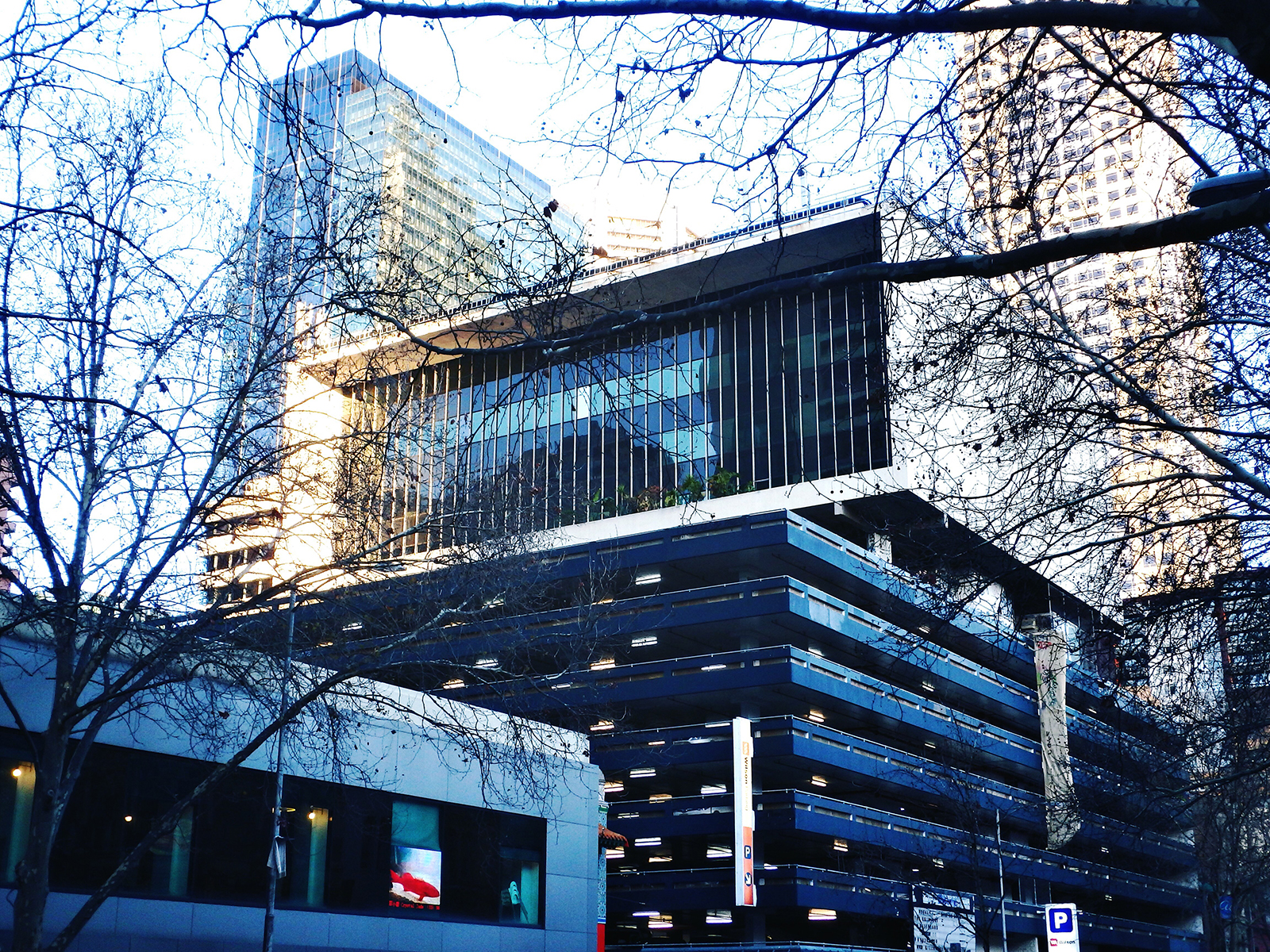
While home to fewer Brutalist buildings than rival capital Sydney, Melbourne nevertheless has a number of outstanding examples. Arguably, the most well-known of these is Total Carpark on Russell Street in the city centre, which for a number of years recently was under threat of demolition to make way for a garish, 70-storey skyscraper. (Fortunately, in part thanks to the relentless paladins of activist group Melbourne Heritage Action, the site is now protected by the city’s heritage register.) Designed by Bogle Banfield and Associates and completed in 1965, Total Carpark is an early expression of Japanese-style Brutalism, notable for its ‘floating’ office block on cantilevered supports above the seven storeys of the carpark itself, giving it a boxy appearance vaguely resembling an old-fashioned television set. Total Carpark also holds the historical honour of housing Melbourne’s very first nightclub in its basement, upon its opening in 1965: The Lido, a Parisian-inspired cabaret joint replete with scanty, feather-adorned costumes. Nowadays, that basement spot is occupied by popular live music venue Billboard, while the currently closed-off upper carpark levels are a favourite of skateboarders on weekends.

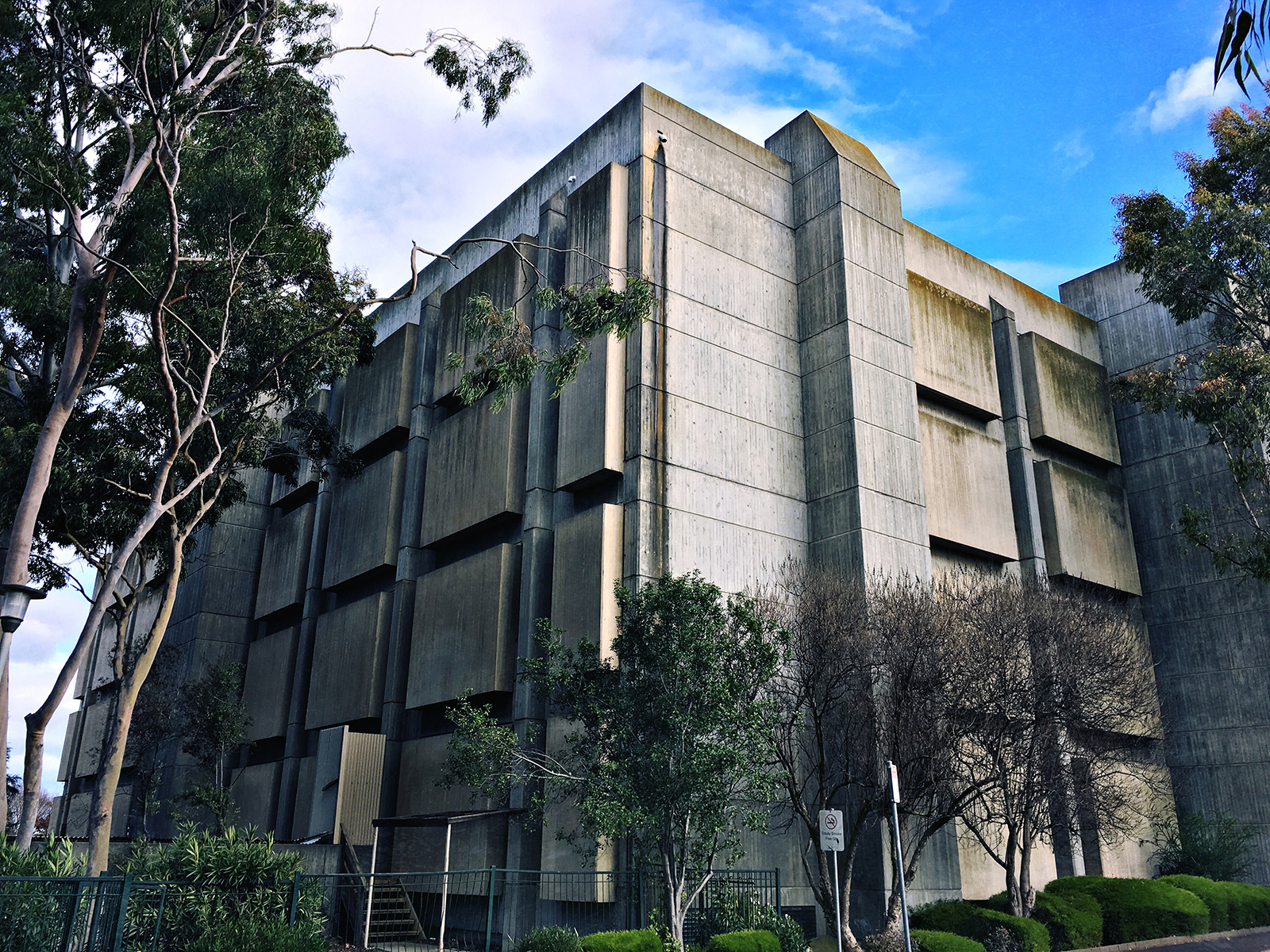
A little further from the city centre in the inner-west suburb of Footscray lies another prominent example of Melbournian Brutalism. The now-disused Footscray Psychiatric Hospital is a visually commanding and physically imposing structure, its dramatic appeal no doubt heightened by the emotive power of its history. Commissioned by the Department of Mental Hygiene in 1968 and eventually opened for use in 1977, the building’s designer remains unknown, further adding to its aura of intrigue. Externally, the building is almost entirely constructed from off-form concrete, with tall, narrow windows that are barely visible from the outside, giving the impression of a bleak and tenebrific interior. (In hindsight, Brutalism is probably not the best choice of architectural style for a mental health facility.) Although the hospital has been permanently closed since 1996, the building and its surrounds remain well cared for, while awaiting funding for refurbishment and reuse.

In stark contrast to the above, and in general to the imposing monoliths often associated with Brutalism, a considerable number of Melbourne’s Brutalist buildings actually tend to be on the diminutive side. Some examples, such as the Blackwood Street Bunker – a trichotomic office building just north of the city centre – are barely bigger than a large suburban house.

The Plumbers and Gasfitters’ Employees’ Union Building (PGEUB) in the inner-north suburb of Carlton is another such example of Melbourne’s smaller-scale Brutalism. Completed in 1971 and designed by well-renowned local architect Graeme Gunn, the building features an off-form concrete exterior with recessed side windows to reduce sun exposure, and has been structurally designed to allow for vertical expansion if required. Both PGEUB and the Blackwood Street Bunker have been praised for not only their striking, expressionistic forms, but for their emphasis on functionalism and circulation in their interior layouts, reinforcing Brutalism’s humanistic philosophy.

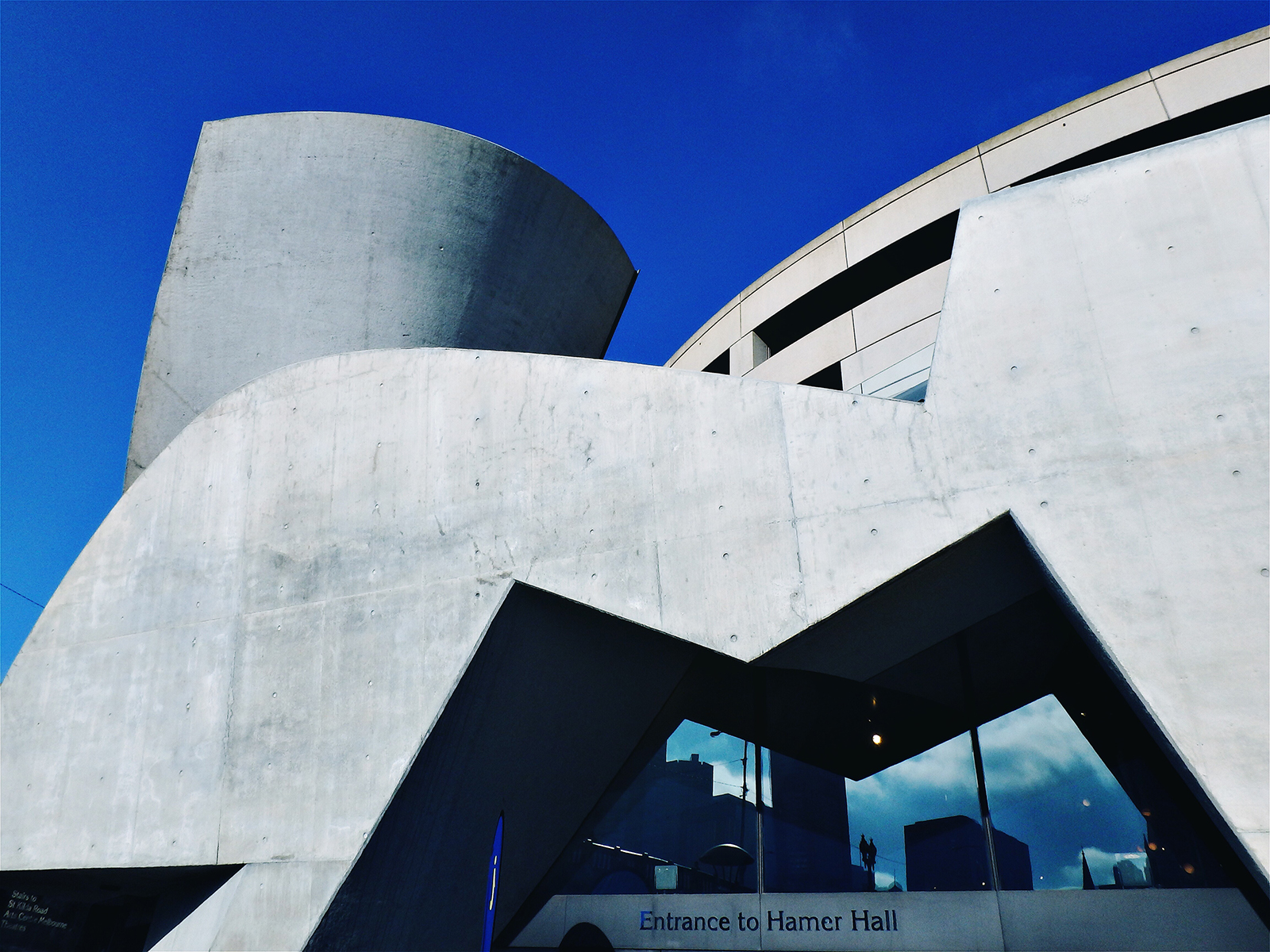
Reflecting the diverse and sometimes contradictory nature of Melbourne’s overarching architectural style, elements of Brutalism are sometimes incorporated within or alongside other Modernist sub-styles. Performing arts venue Hamer Hall (formerly Melbourne Concert Hall), situated on the promenade along the Yarra River at the junction of Southbank and the central business district, is one such amalgam. Originally designed by Australian Modernist architect Roy Grounds in the 1970s, with interior work completed by John Truscott following Grounds’ death in 1981, Hamer Hall features geometric, raw concrete forms at riverbank level, topped by a cylindrical rampart with large horizontal, recessed windows that create a striking glow by night. The unembellished sturdiness of its exterior, however, belies a thoroughly opulent interior that echoes Melbourne’s more classical architectural styles, recently refurbished by Ashton Raggatt McDougal (ARM Architecture): think plush vermilion carpets, illuminated sculptures made entirely from Swarovski crystals, and extensive use of gold leaf detailing.

A short stroll from Hamer Hall is Eureka Tower, a (mostly) residential skyscraper famed for being the tallest building in Melbourne, as well as one the tallest residential buildings in the world. Completed in 2006, the tower was designed by Fender Katsalidis, who described it as “a symbol of the transcendence of high density living over what has traditionally been the low suburban density mindset of Melbourne”. Named after and inspired by the Eureka Stockade, a rebellion instigated by gold miners during the Victorian Gold Rush in 1854, numerous elements of the building’s design directly reference its namesake’s history, such as the dark blue and white striped facade (reminiscent of the Eureka Stockade flag), and the gold cladding at the top of the tower, with a red stripe to represent the blood spilled during the revolt. For many visitors to the building though, history is of little interest: the appeal lies in the tower’s awe-inspiring stature, and the views from its 88th floor public observation deck.

Despite the city’s commitment to preserving its Victorian architecture, Melbourne has the tallest skyline in the country, with a vast number of high-rise buildings, mostly concentrated in the city centre. After a very short-lived initial “skyscraper boom” in the late 1880s that produced Melbourne’s first Victorian-style high-rise (the 12-storey APA Building, eventually demolished in 1980), there would be little interest in these types of structures until after the second world war. In 1958, Orica House (formerly ICI House), designed by Osborn McCutcheon, was unveiled as Melbourne’s first modern skyscraper, and is widely regarded as a significant catalyst of the high- rise boom that would drastically change the city’s skyline in the second half of the 20th century.

Designed in the International style and inspired by then-recently built glass skyscrapers in New York City, such as the United Nations Secretariat building, Orica House stood at more than double the previously imposed height limit, and with its uncompromising geometry and coruscant glass facade, was both visually arresting and an exciting symbol of progress and modernity. To all but a handful of conservative misoneists, Orica House signified the start of Melbourne’s transition into a thriving cosmopolis.

Less than a ten minute walk down Spring Street from Orica House lies Shell House, designed by Harry Seidler in 1989. Widely regarded as one of Australia’s leading Modernist architects since the late 1940s, by 1989 Seidler already boasted an impressive oeuvre of landmark buildings; however, Shell House marked the arrival of the first Seidler-designed skyscraper in Melbourne (the others all having been built in and around Sydney). Like his earlier commercial buildings in Sydney, such as Australia Square and the MLC Centre, Shell House features elegant curvilinear forms and neutral- toned granite cladding, with flexible interiors. Considered an outstanding example of later era Australian Modernism, Shell House remains the only Seidler-designed building in Melbourne’s city centre.

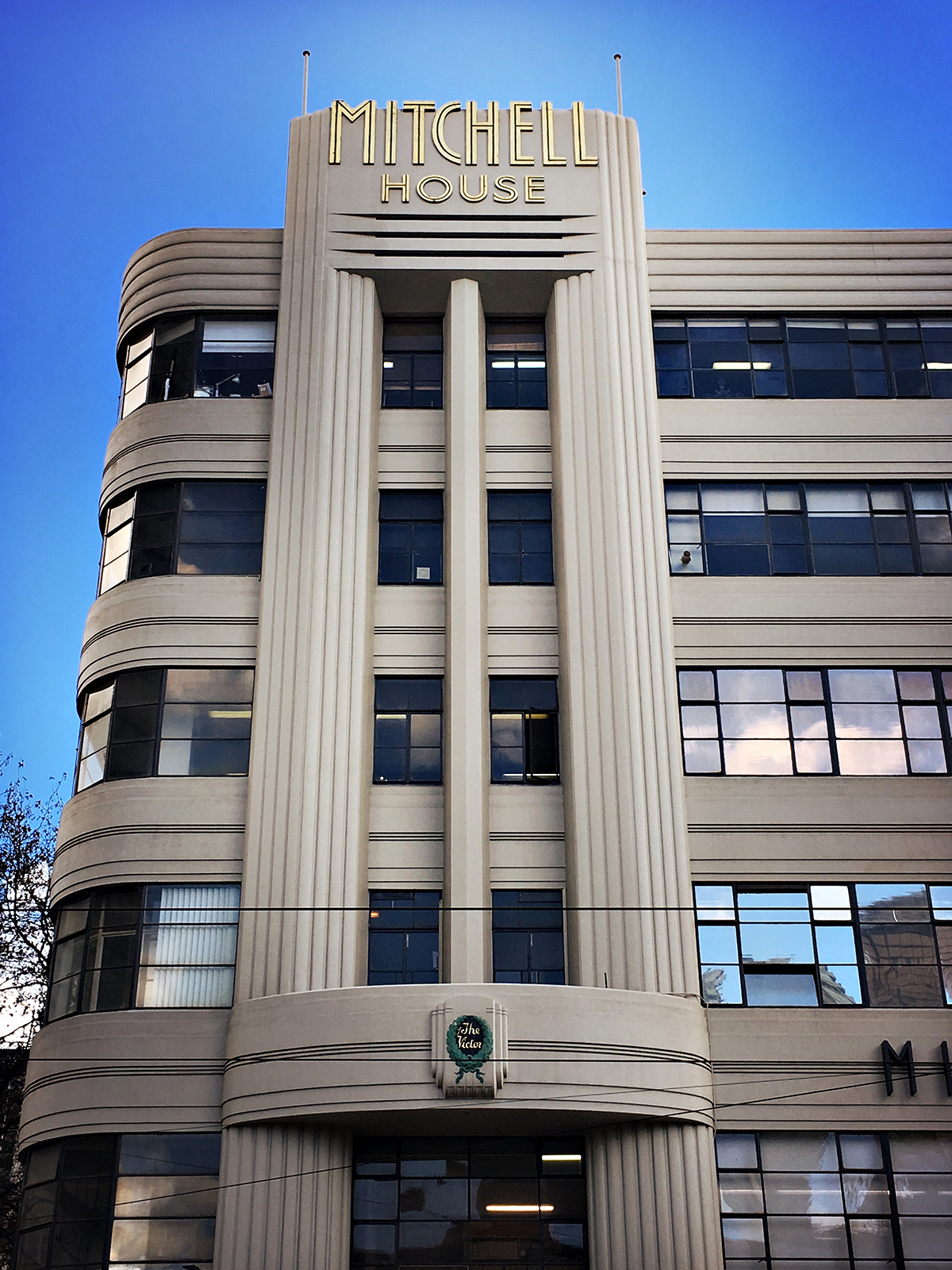
An early building that hinted at the penchant for curved forms that would later become an iconic element of Seidler’s style was Mitchell House, widely considered Melbourne’s finest example of Streamline Moderne. Designed by prolific Melbournian architect Harry Norris in 1937, six-storey Mitchell House is recognised for its strong horizontal lines, Art Deco lettering, and curved corner facade reminiscent of Eric Mendelsohn’s Mossehaus in Berlin. Now home to the likes of a record shop and collaborative space for creative freelancers (in addition to more traditional office spaces), Mitchell House’s sleek off-white exterior gives the building a timelessly modern feel despite now being 80 years old.

Since the start of the 21st century, architecture in Melbourne has increasingly prized creativity and the reinvention of older Modernist styles. A particularly excellent example of this can be found in Upper House, a 17-storey apartment block a few minutes north of the city centre, designed by Jackson Clement Burrows and completed in 2014. A striking fusion of influences from the International Style to Japanese Metabolism, the structure bears more than a fleeting resemblance to the Nakagin Capsule Tower – if it had been designed by Richard Meier. The varying depths at which the cubbyhole-style balconies protrude from their accompanying apartments gives the building a dynamic, three-dimensional appearance, and the brightness of the upper levels’ shiny, white curtain wall facade against the blue sky on a sunny day makes for a dazzling vision.

Environmental consciousness is another factor demanding increasing consideration when it comes to new building designs. In Melbourne, no building better exemplifies the current trend for combining environmental sustainability with a readiness to incorporate future enviro-technological advances than the RMIT Design Hub, designed by Sean Godsell and completed in 2012.

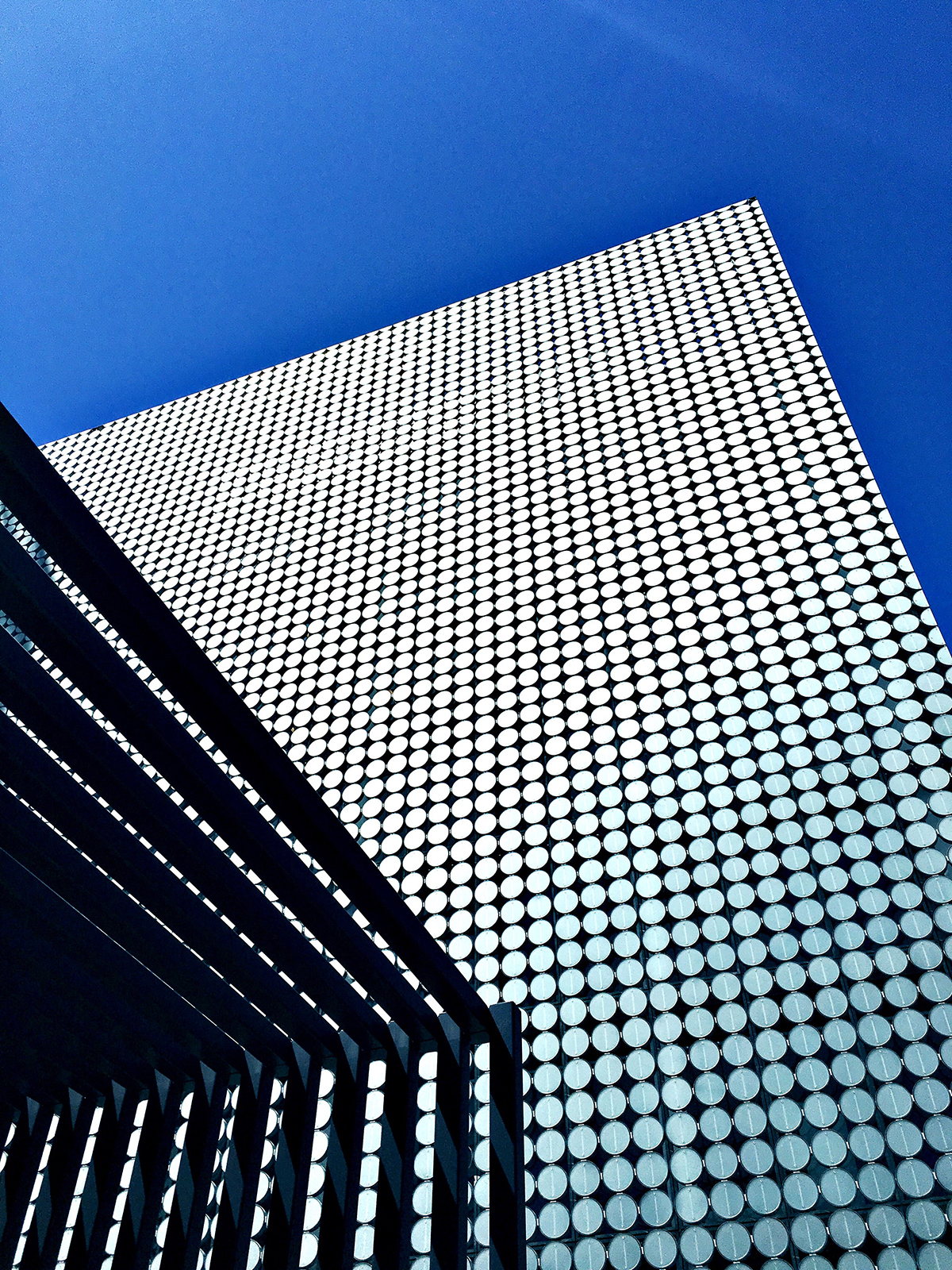
A multi-purpose research, studio and exhibition space of nearby university RMIT (Royal Melbourne Institute of Technology), the Design Hub is notable for its facade comprised of over 17,000 rotatable, sandblasted glass discs: a climatically responsive “smart skin” which adjusts the discs’ rotation to shade the building’s interior. As of 2017, many of the discs are being replaced with updated versions that incorporate photovoltaic solar cells, in the hope of eventually being able to harvest enough solar energy to power the building entirely. In the meanwhile, the Design Hub’s sheer size, and the dizzying repetition of its circular patterned facade, at least make for an arresting visual presence.

The combination of striking appearance and emphasised functionality is a unifying feature of many of Melbourne’s Modernist buildings from the past half-century, however varied their individual styles. From late 1950s International Style skyscrapers to state of the art, high-tech design, the city’s architectural eclecticism has contributed to a growing appreciation of Melbourne as a progressive and vibrant metropolis, of considerable interest to Modern architecture enthusiasts.


Tagged melbourne, modernism, published works

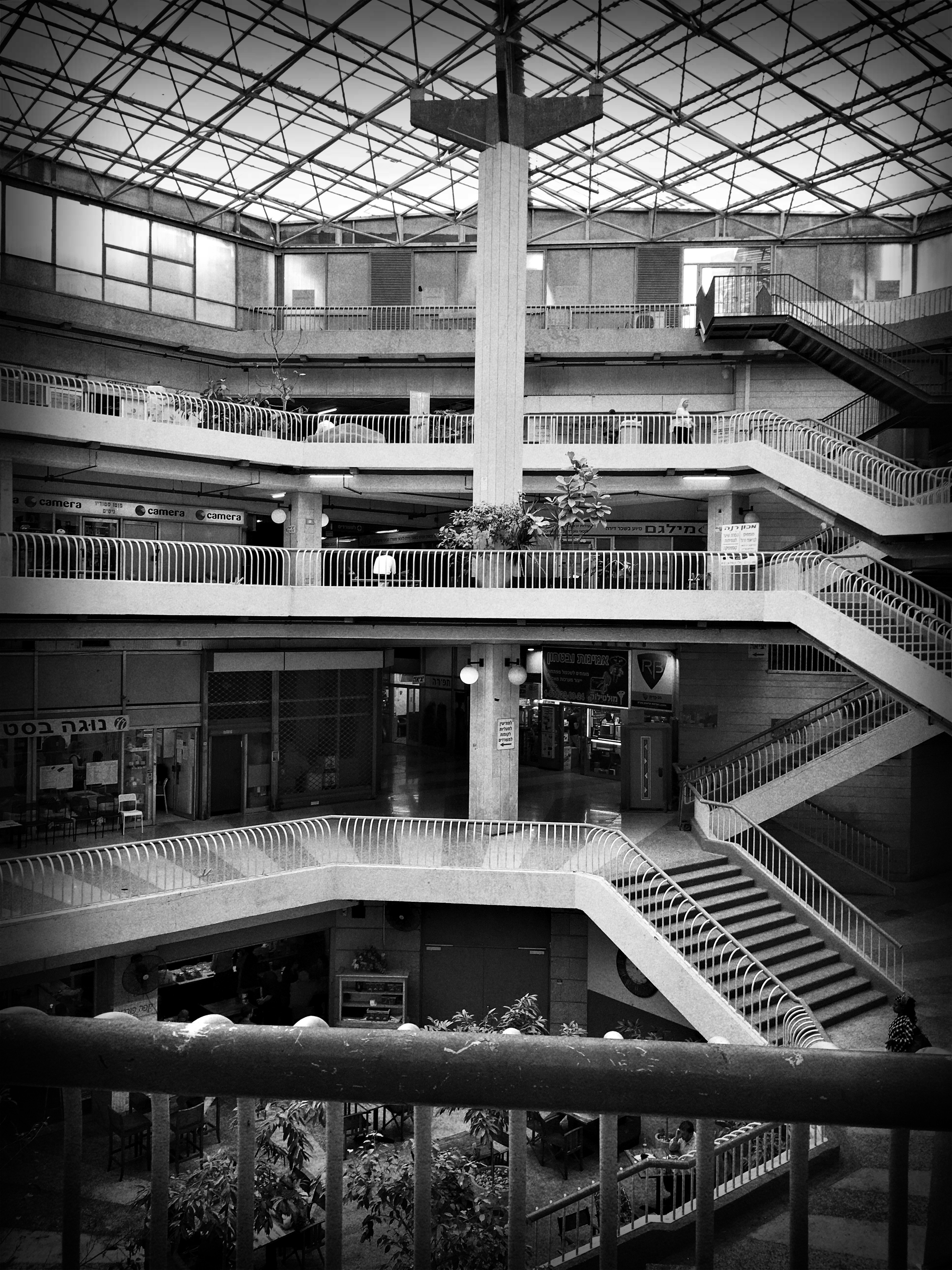
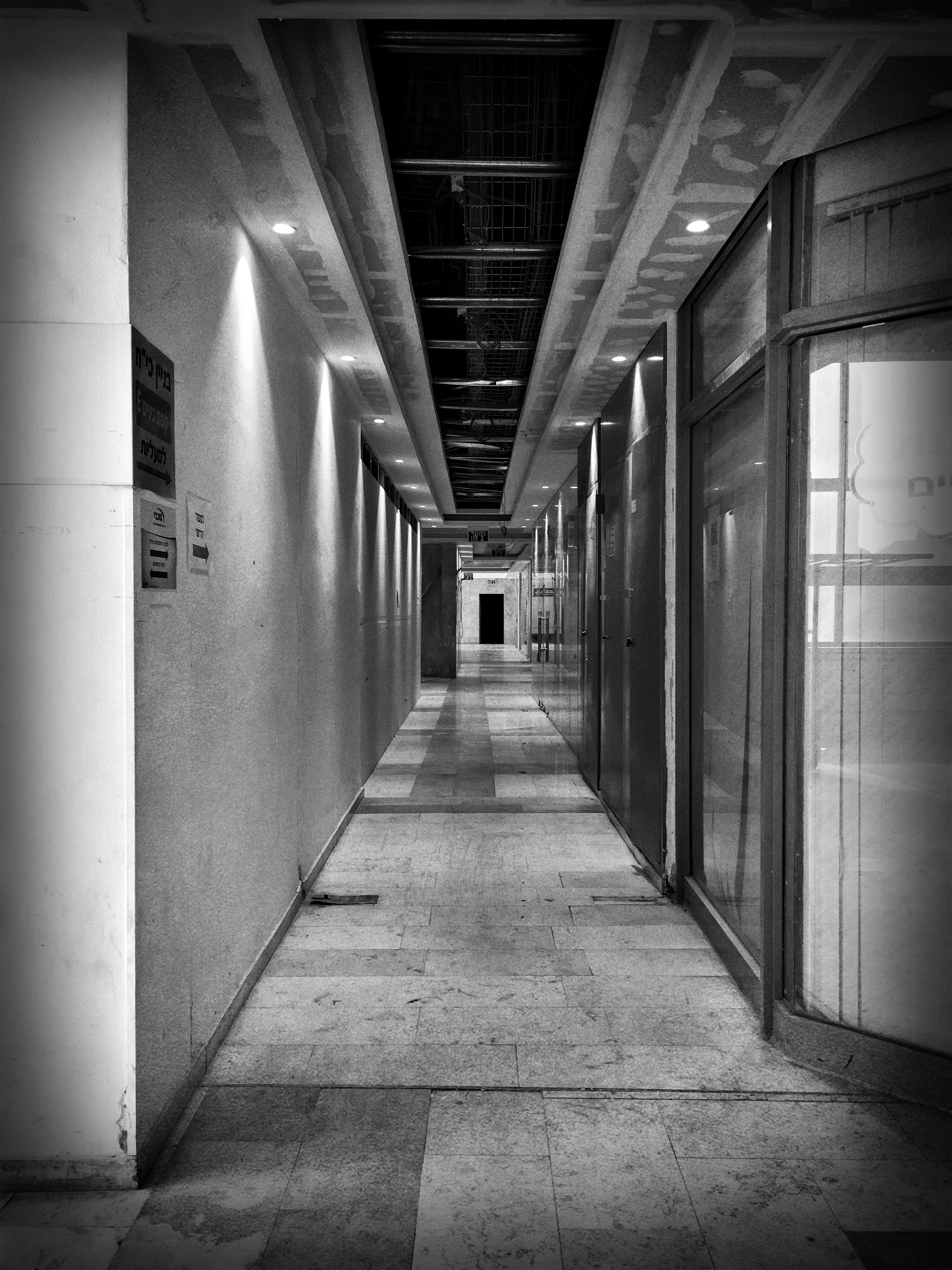
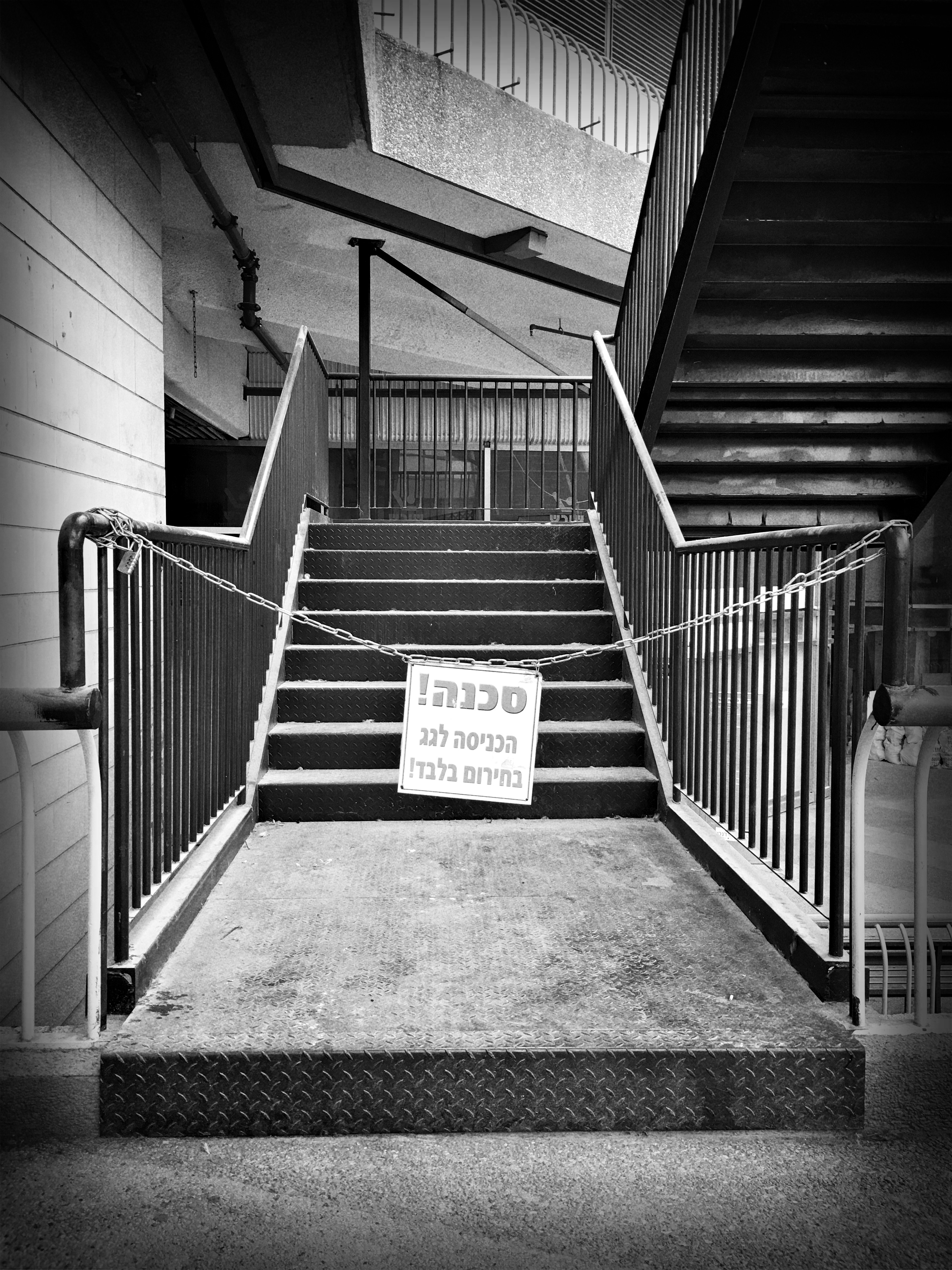
The unholy ruins of Binyan Clal

February 20, 2018

If you thought Ramot Polin would have been the dystopian highlight of my trip to Jerusalem, that’s  just because I hadn’t mentioned the Clal Centre yet.

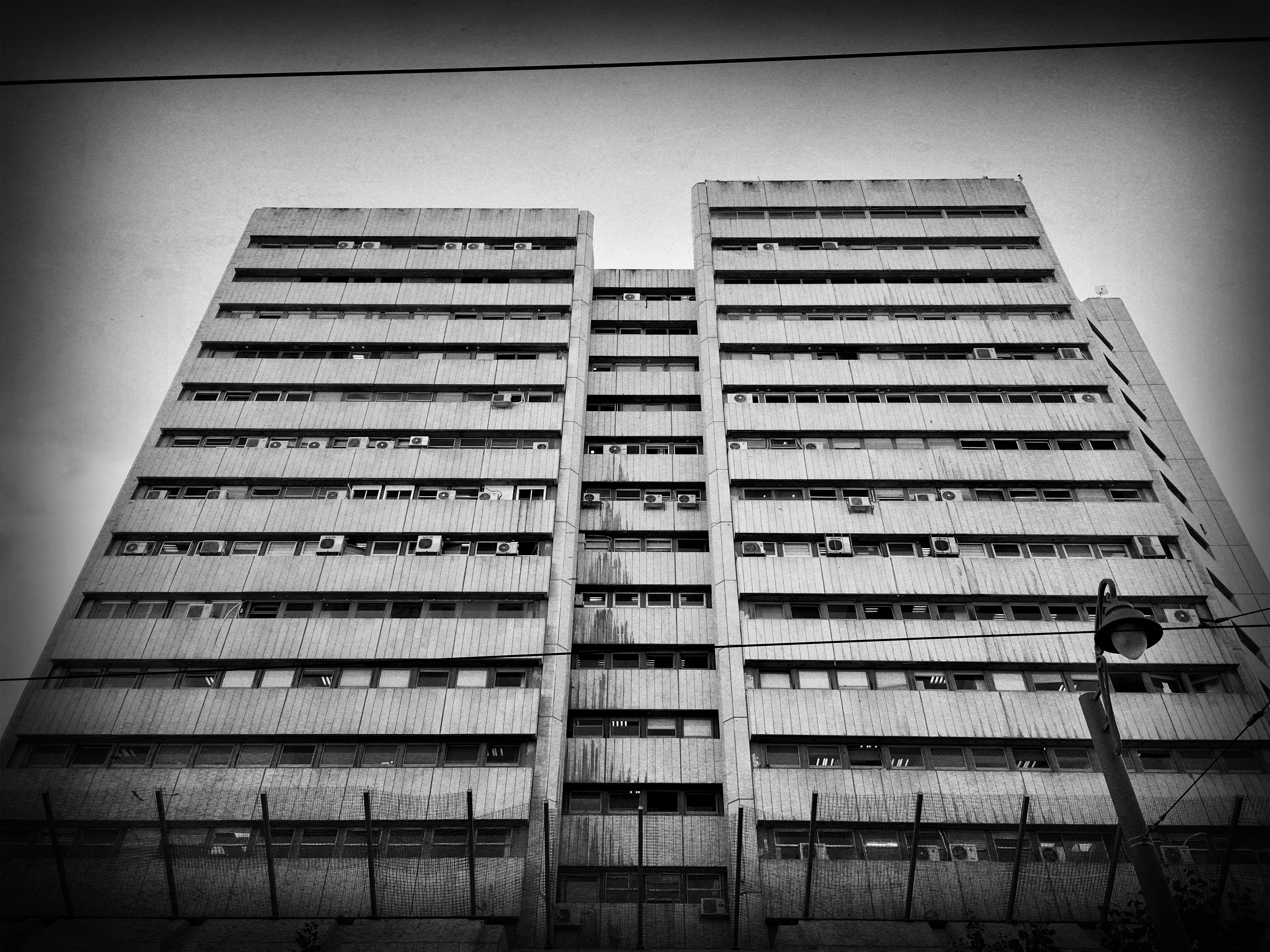
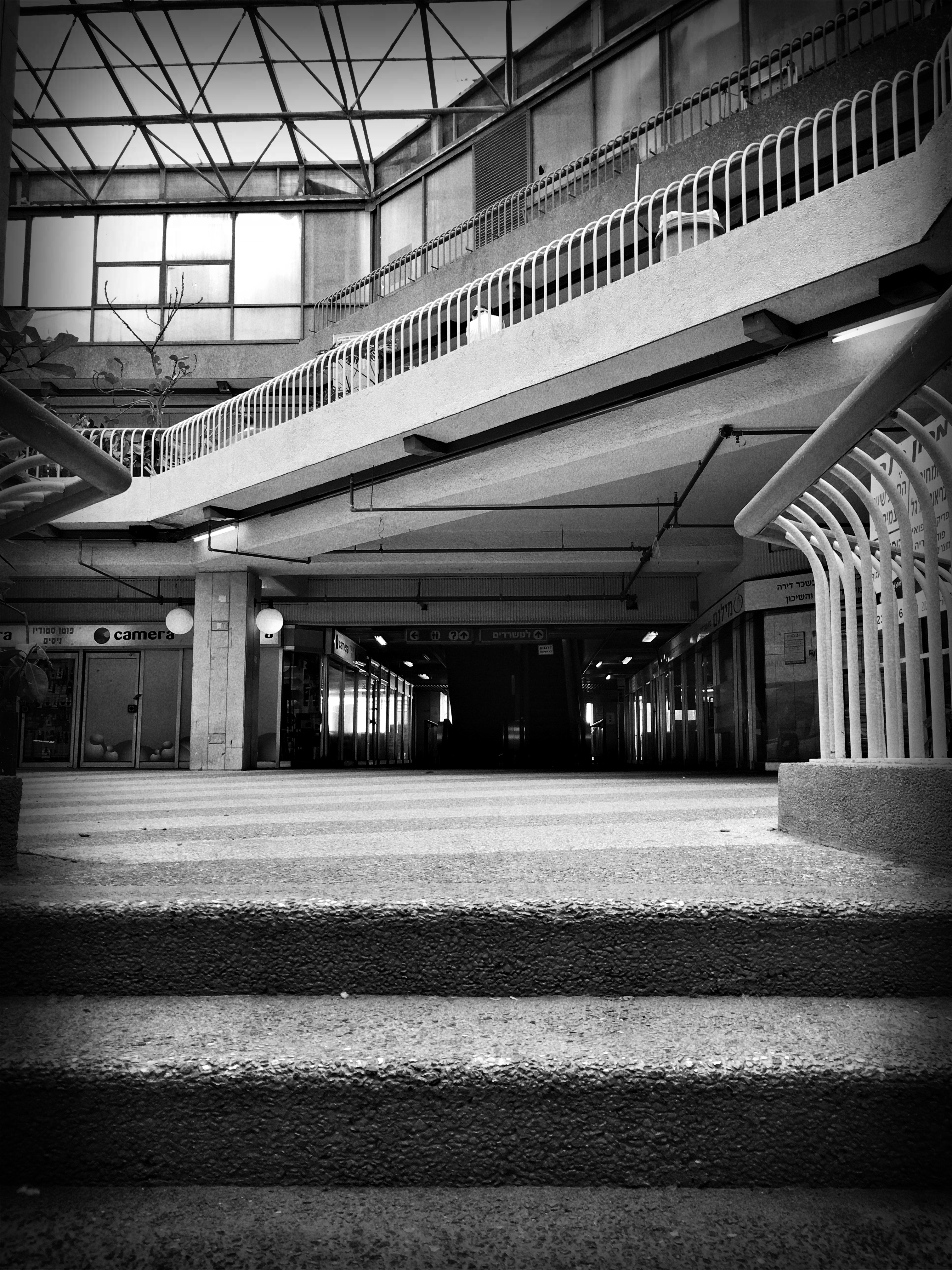
What is it that attracts us to unsettling environments, and in particular, architectural dereliction? Joann Greco, writing about The Psychology Ruin Porn, cites the implied romance, nostalgia, wistfulness, and the provocative nature of abandoned places, as well as themes of time, nature, mortality, and disinvestment. I’d concur that most of that holds true for the Clal Center’s eerie appeal. The only difference is: the Clal Centre isn’t actually abandoned.

Built in the 1970s, the Clal Centre, also known as Binyan Clal (בנין כלל), was Jerusalem’s first major indoor shopping mall, and for the next decade or so was occupied by a large number of privately owned shops and offices, including those associated with government agencies. By the 1990s though, many of the centre’s occupants had moved or gone out of business, largely due to the relocation of government offices to the nearby Givat Ram neighbourhood, and shoppers’ preference for the admittedly much brighter and less intimidating-looking Malha Mall.

The Clal Centre’s reputation for being a suicide hotspot (so much so that safety nets had to be installed around the building’s exteriors, due to the number of people leaping to their deaths from the upper levels) didn’t help either, nor did circulating rumours that a criminal gang had murdered one of their rivals and covertly buried the body in the building’s concrete foundations. Some believe the Clal Centre to actually be haunted.

Stepping inside, it’s not difficult to understand why.


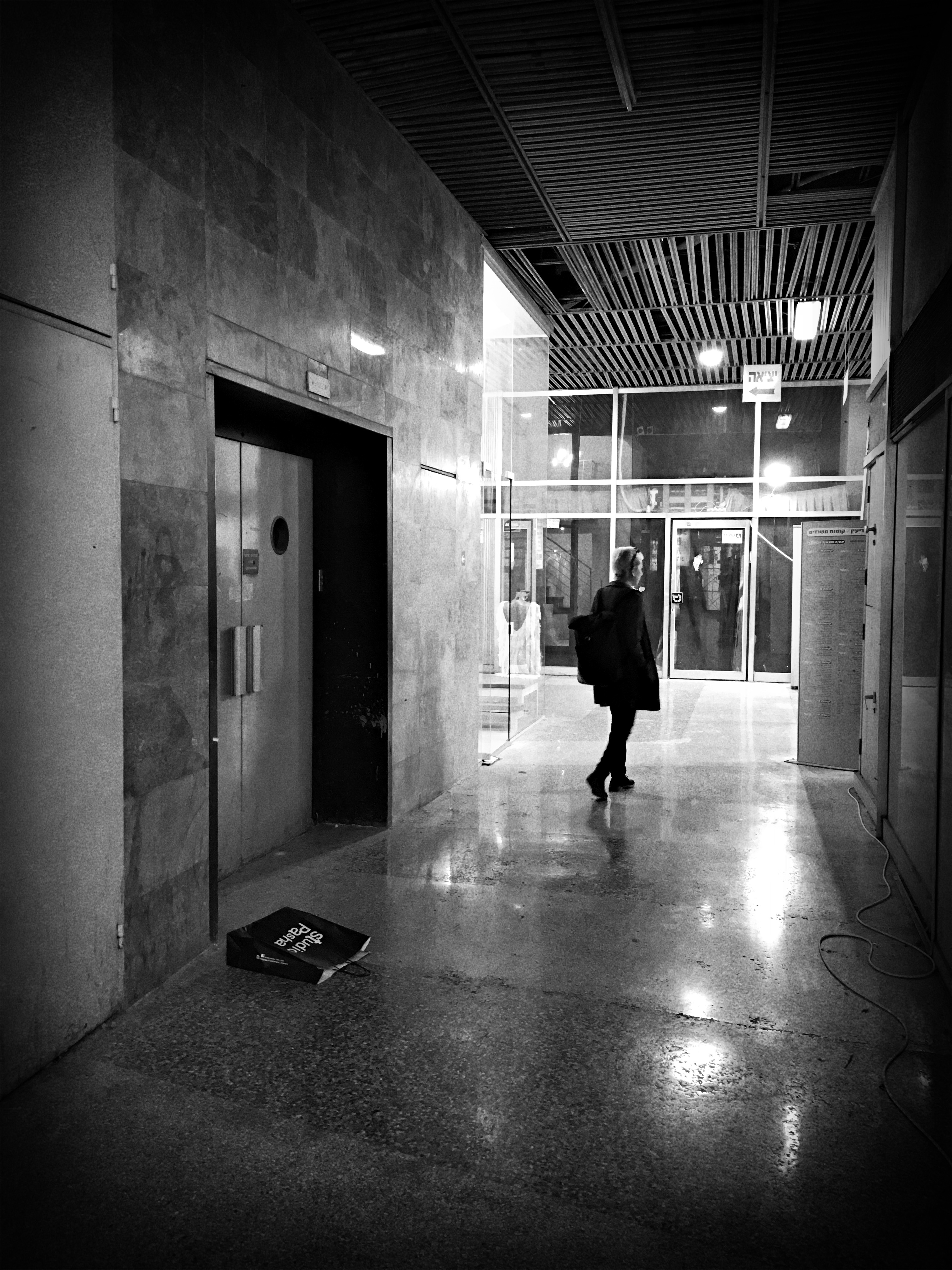
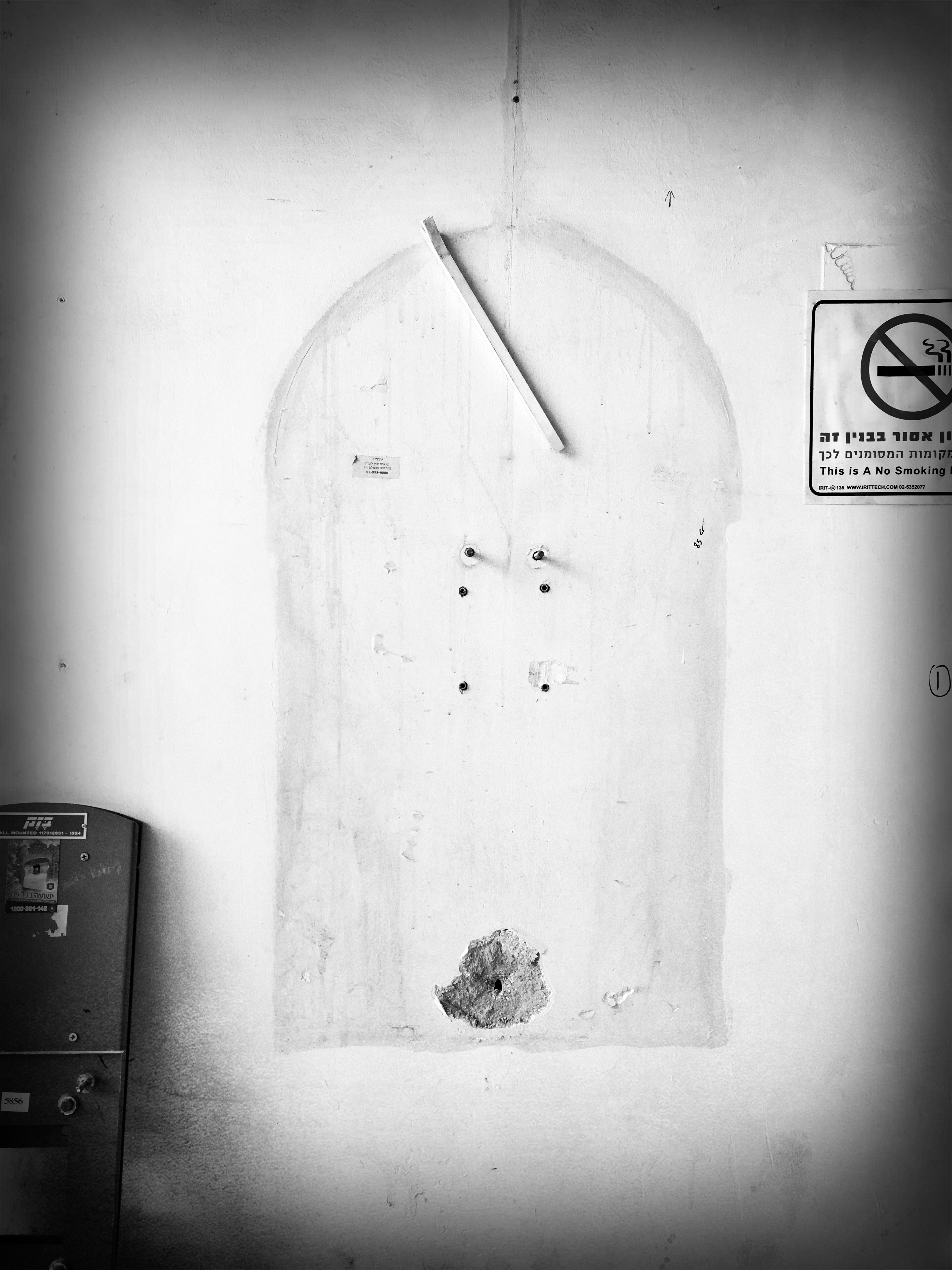
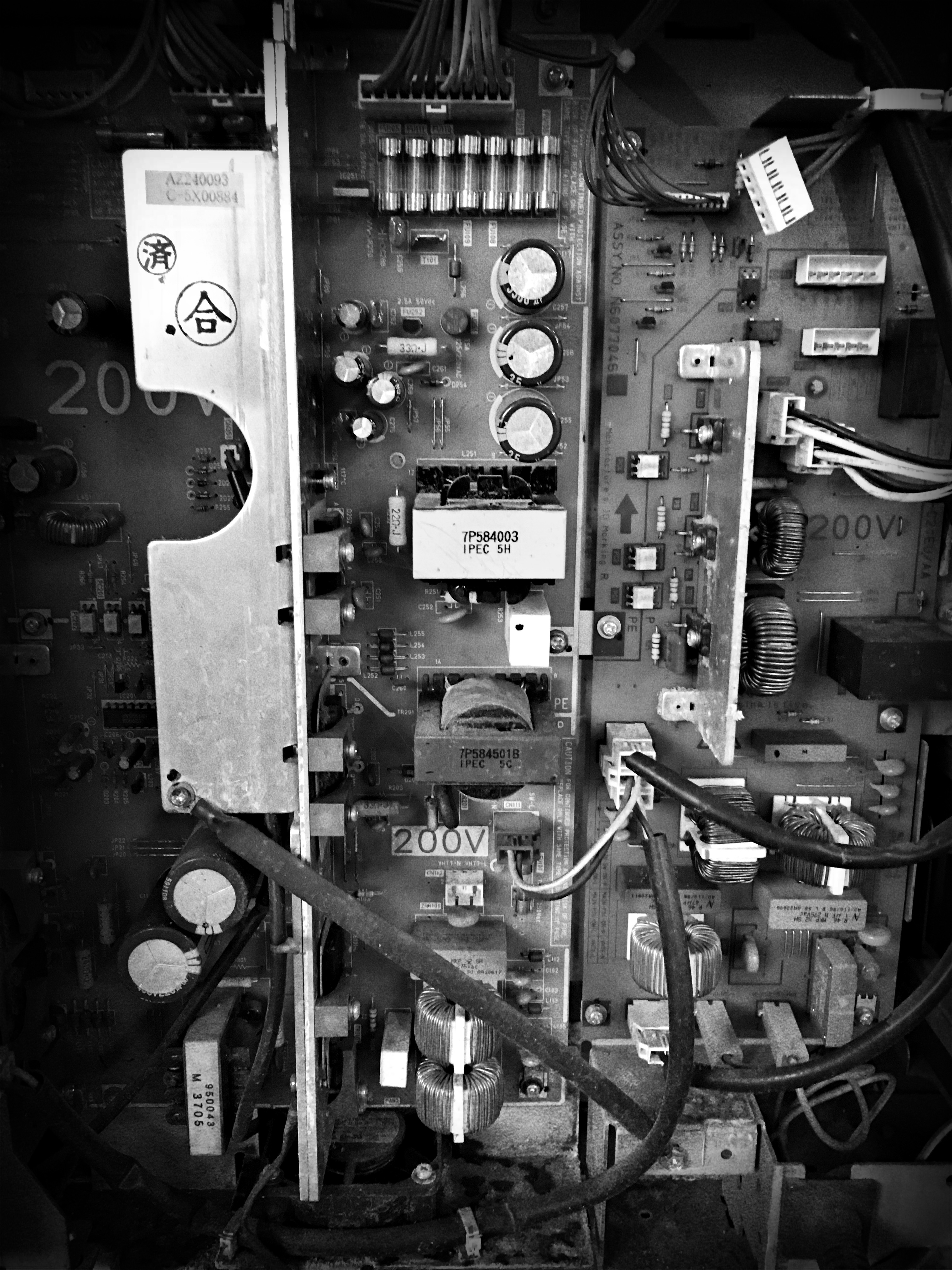
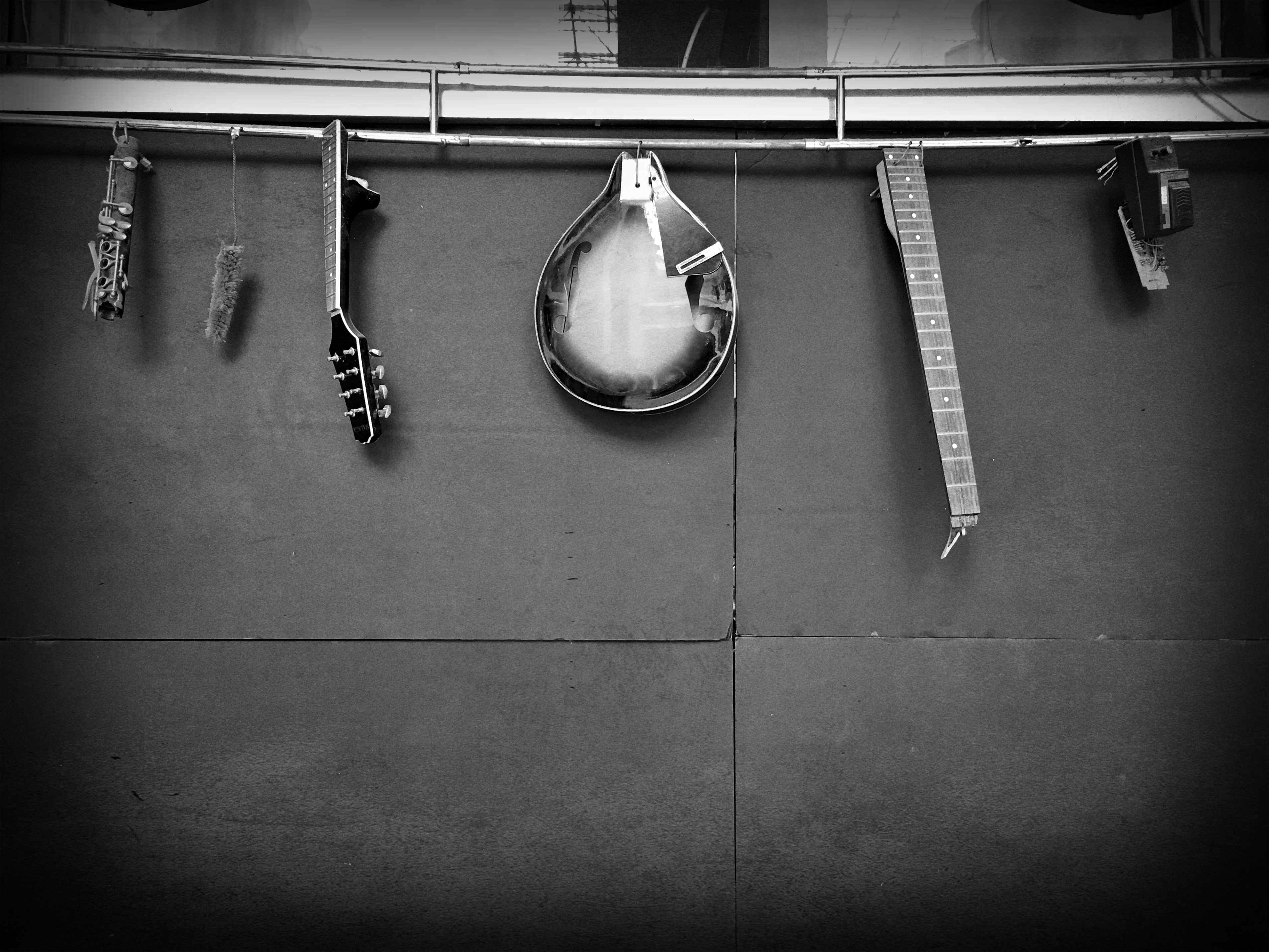
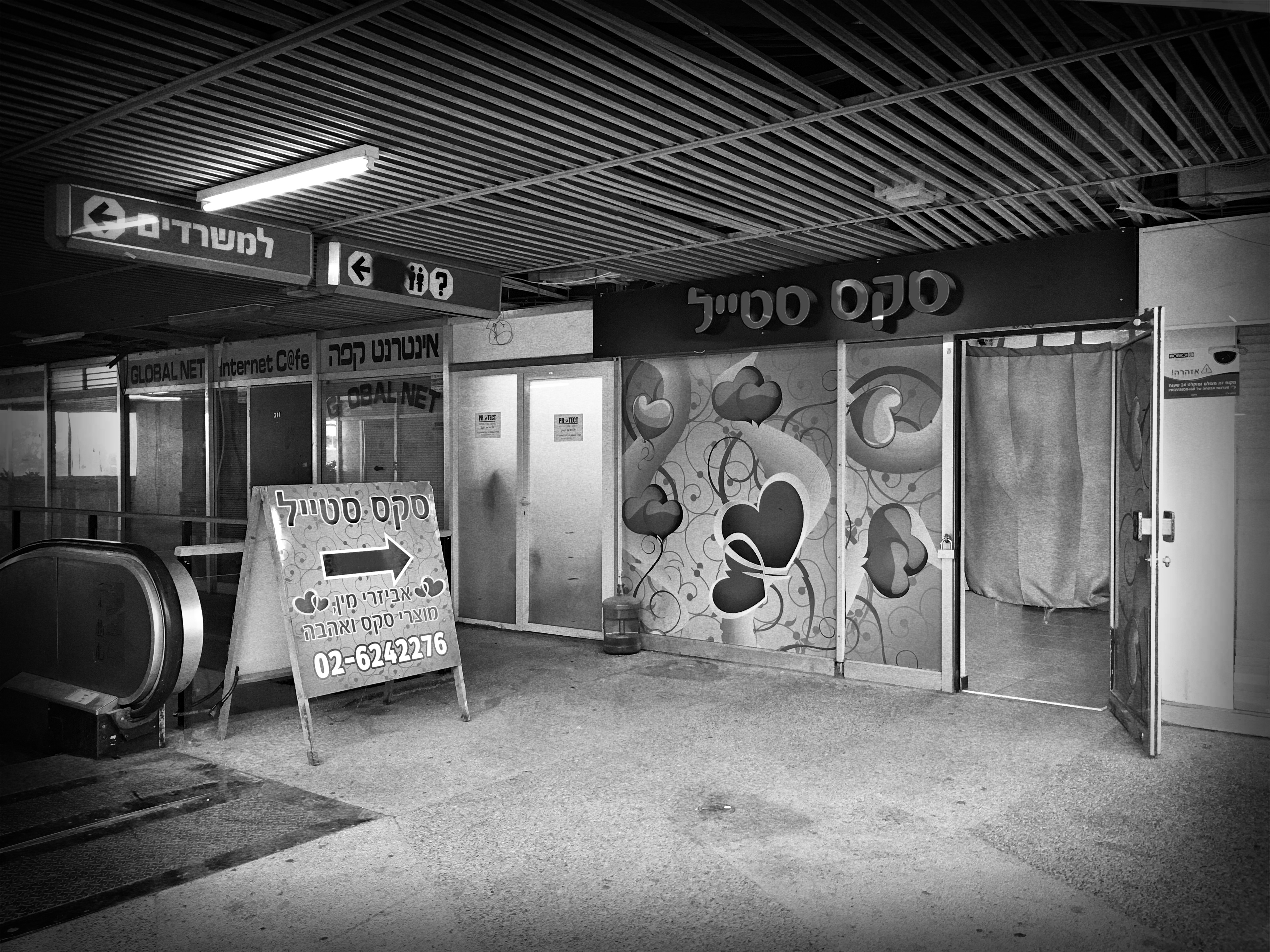
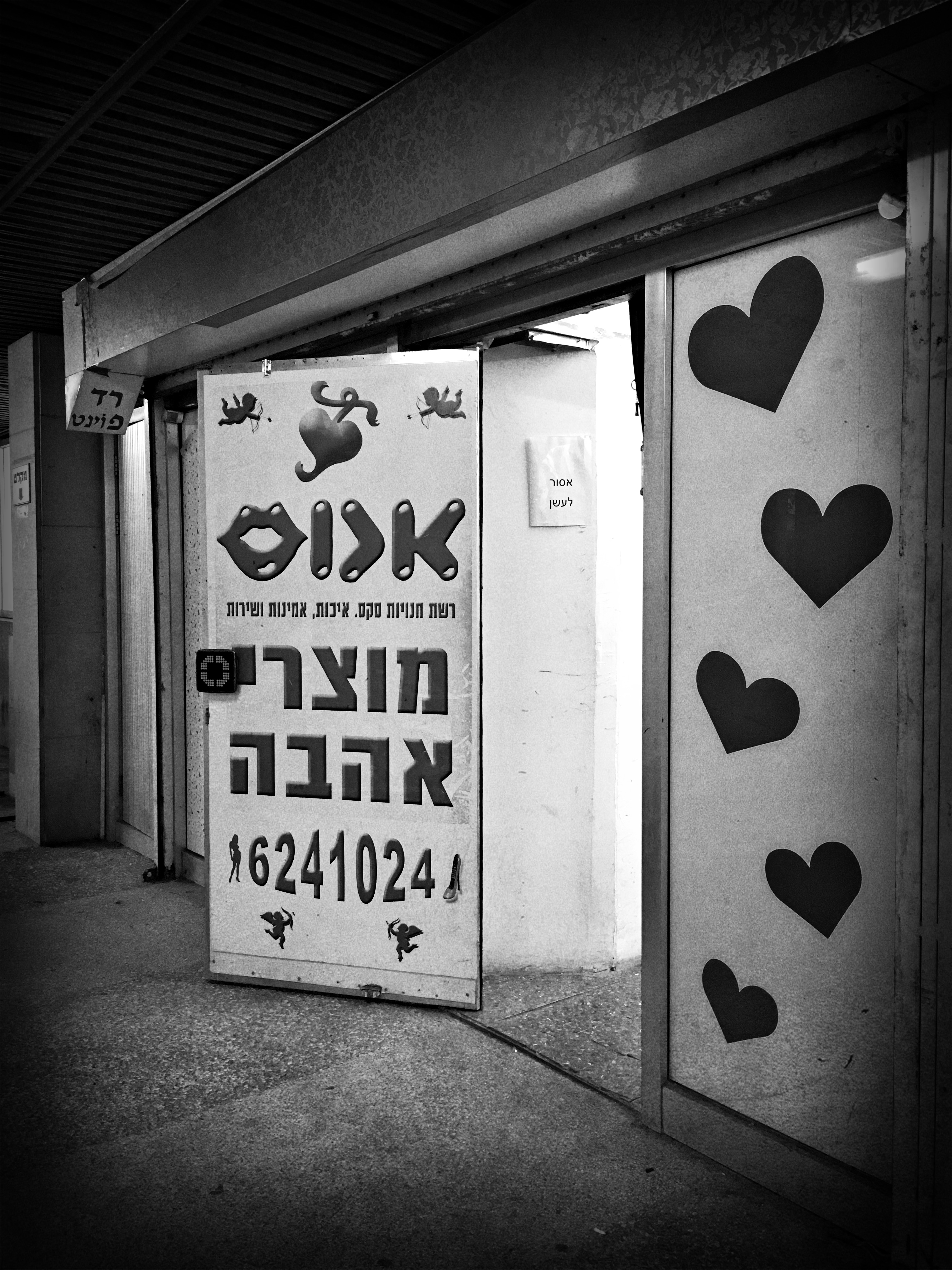
The rationale for the Clal Centre’s unique brand of eeriness lies in its straddling the boundary between the benign and the ominous. It’s not abandoned, but neither could it be said that it’s really operational, at least not in the traditional sense. The Clal Centre is in a coma. The small handful of shops that remain seem run-down, and a number of them happen to be sex shops, adding an edge of seediness to the centre’s already grim and creepy atmosphere. The ruins of shops that were abandoned without actually being cleaned out beforehand scatter about the periphery of the building’s otherwise cavernous hallways. A broken photocopier covered in tumbling piles of books and manuals collects dust outside of what presumably was once an office; nearby lies a pile of debris including more broken machinery, tangled wires and a ripped down Venetian blind. Around the corner, a male mannequin stands alone in an otherwise empty corridor full of closed shops, wearing a t-shirt but no trousers. The escalators are no longer operational, and although I’m not sure about the status of the elevators, I wouldn’t take my chances even if they were. Oddly, there’s virtually no graffiti inside. But it sure is grimy.

My friend and I encounter roughly ten people throughout the whole building in the hour that we were there, and this is at lunch time on a Tuesday. It all starts to feel quite apocalyptic.


What could be done with the Clal Centre now? The Muslala Arts Collective has some ideas. The group has taken to renovating the building’s top floor and rooftop as a communal green space with an organic urban farm and organic beehives, a dance and yoga space, café, and reading corner. A playground is also in the works. It’s a noble endeavour – but only time will tell if it’s enough to save the Clal Centre.

Also posted in: Travel
Tagged architecture, Israel, Jerusalem, photography

Secrets of an architectural Beehive

February 18, 2018

Whenever I travel, exploring a city’s architecture is always a top priority. I love modernism. I love inventiveness. In a nutshell: the weirder and more creative a structure is, the more likely I am to be fascinated by it.

The first half of my (far, far, far too short) trip to Israel last November had been spent in Tel Aviv, The White City, where I’d been mesmerised by a multitude of sleek Bauhaus-style buildings, shielded my eyes from the coruscant gleam of the Azrieli Towers in the midday sun, and stood in awe beneath the arches of the brutalist Great Synagogue on Allenby Street. Even the eerie, derelict central bus station seemed to have a certain charm about it.

In Jerusalem, I was a Proper Tourist, and spent a good portion of my time in the Old City with my best friend, a native Jerusalemite who kindly indulged my wide-eyed curiosity. We took the tour at the Tower of David, returned in the evening for the light show, and wandered through the markets, shopping for the perfect Hamsa to take back home. I went to the Western Wall, pressed a note into the cracks and cried, despite not being a religious person. I ate too much Halva, and have the cavities to prove it. Compared to Tel Aviv, Jerusalem seemed a city seeped in history and culture, rather than a modern architecture enthusiast’s playground.

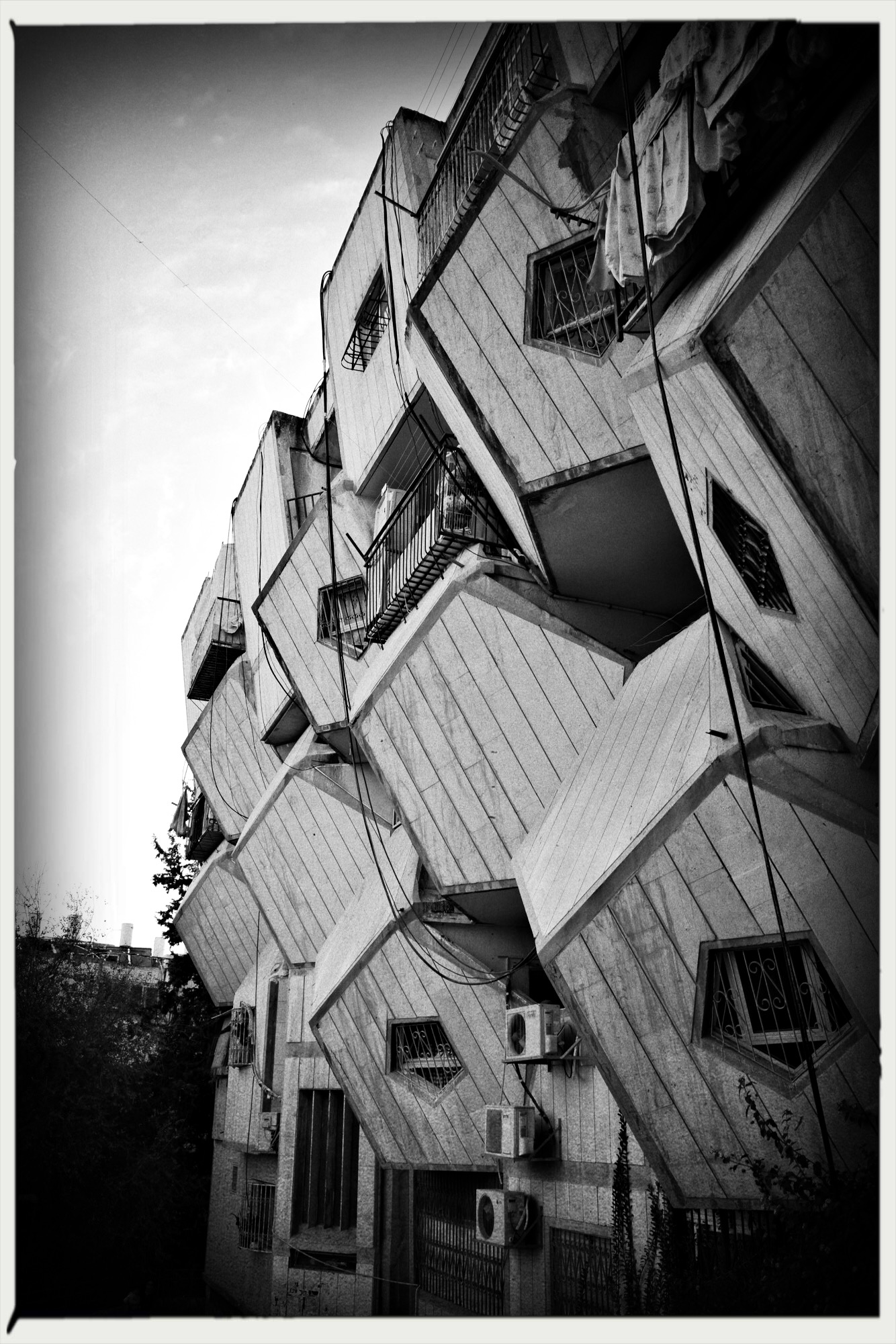
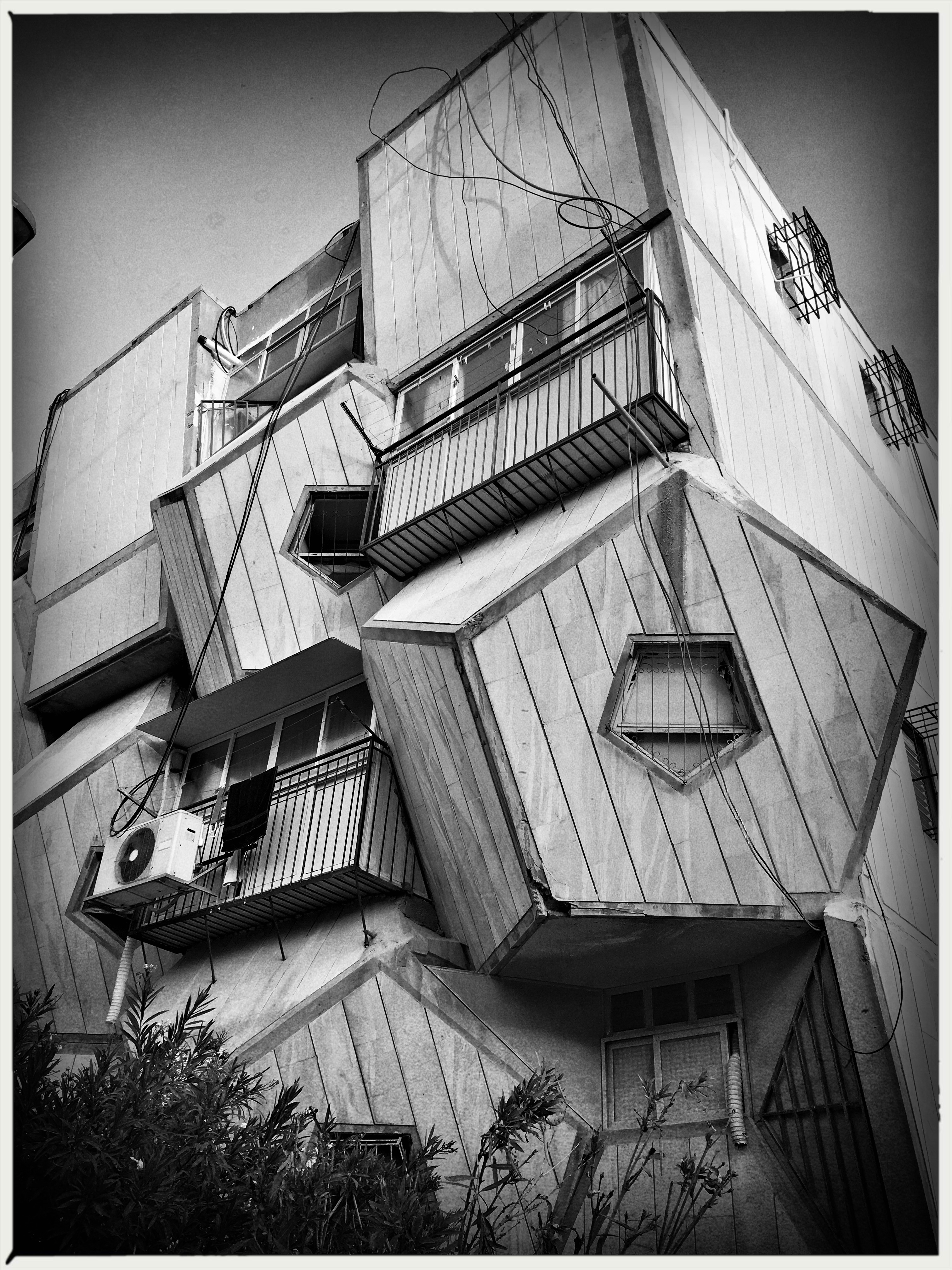
But then I remembered Ramot Polin, a bizarre-looking housing project designed by Israeli architect Zvi Hecker in the aftermath of the Six Day War. And so we hailed a taxi, my friend explaining to the bewildered cabbie, in Hebrew, where it was we wanted to go. I held up my camera for him to see in the rearview mirror, in an attempt at a mute explanation why.

Ramot Polin was not as close to the Old City or downtown Jerusalem as I’d thought. It was one hell of a taxi fare away, isolated, at the top of a hill in East Jerusalem. But the moment I stepped out on to the street at the outskirts of the complex, it was clear the trouble had been worth it: Ramot Polin is truly one of the most uniquely bizarre feats of architecture I’ve personally encountered.

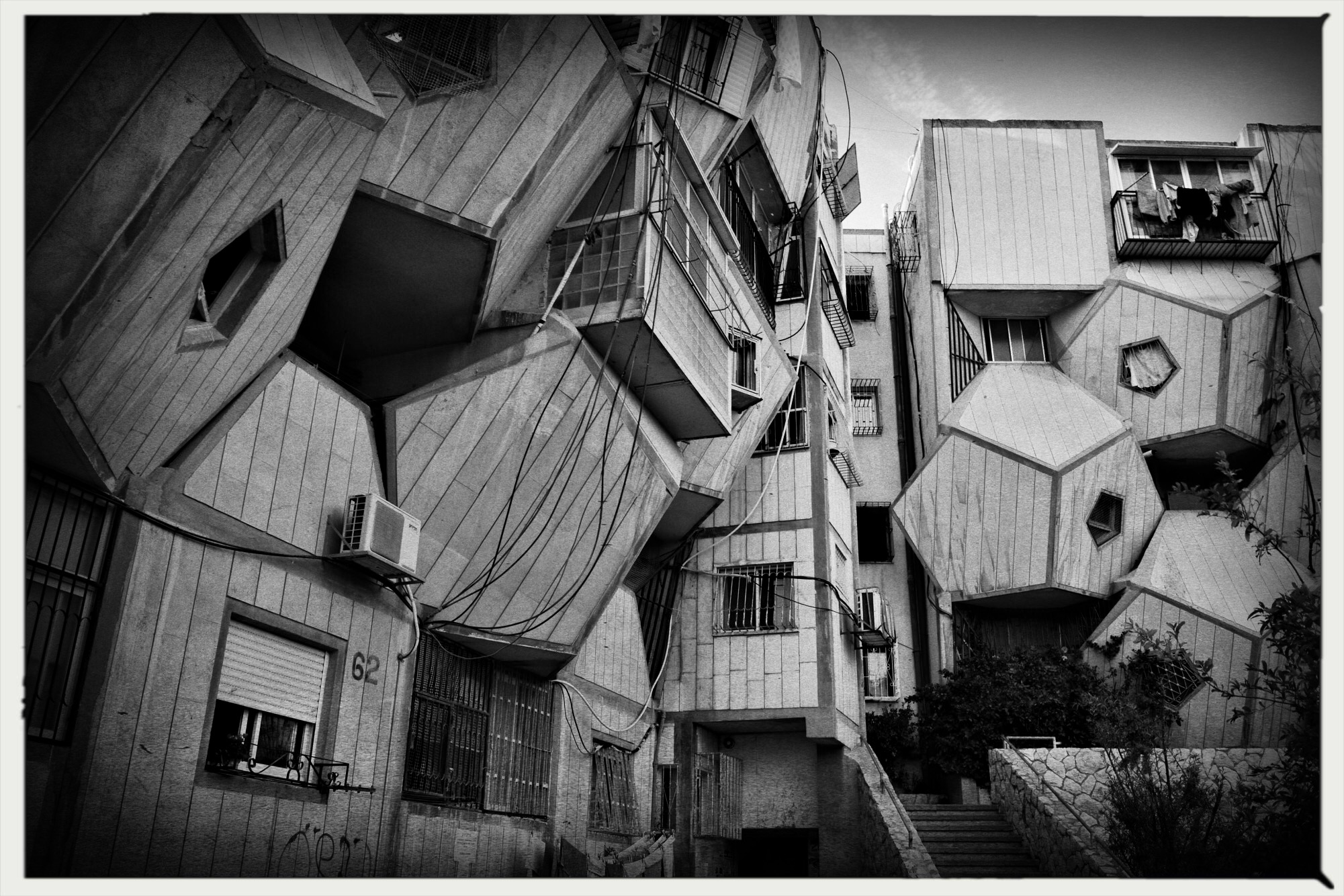
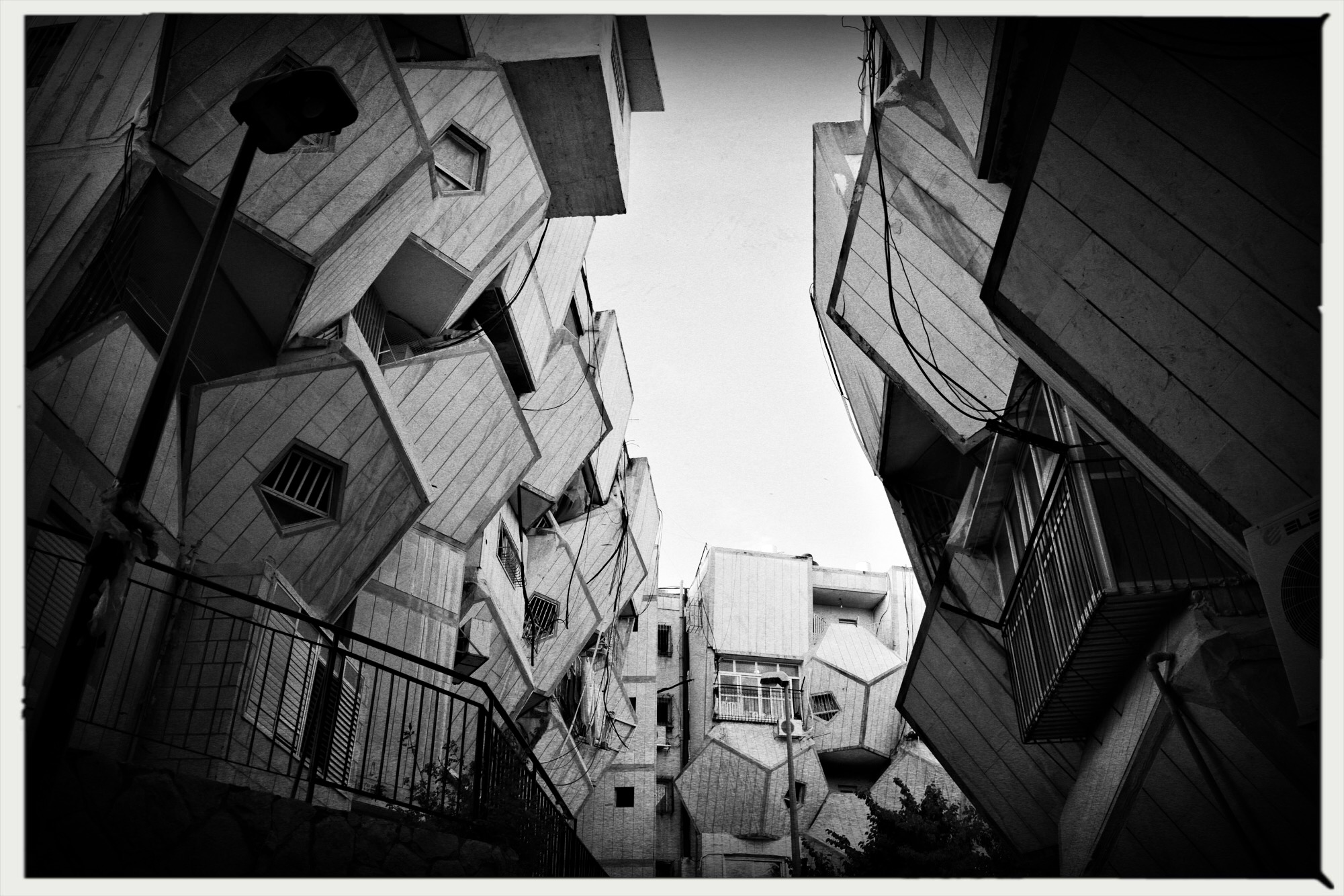
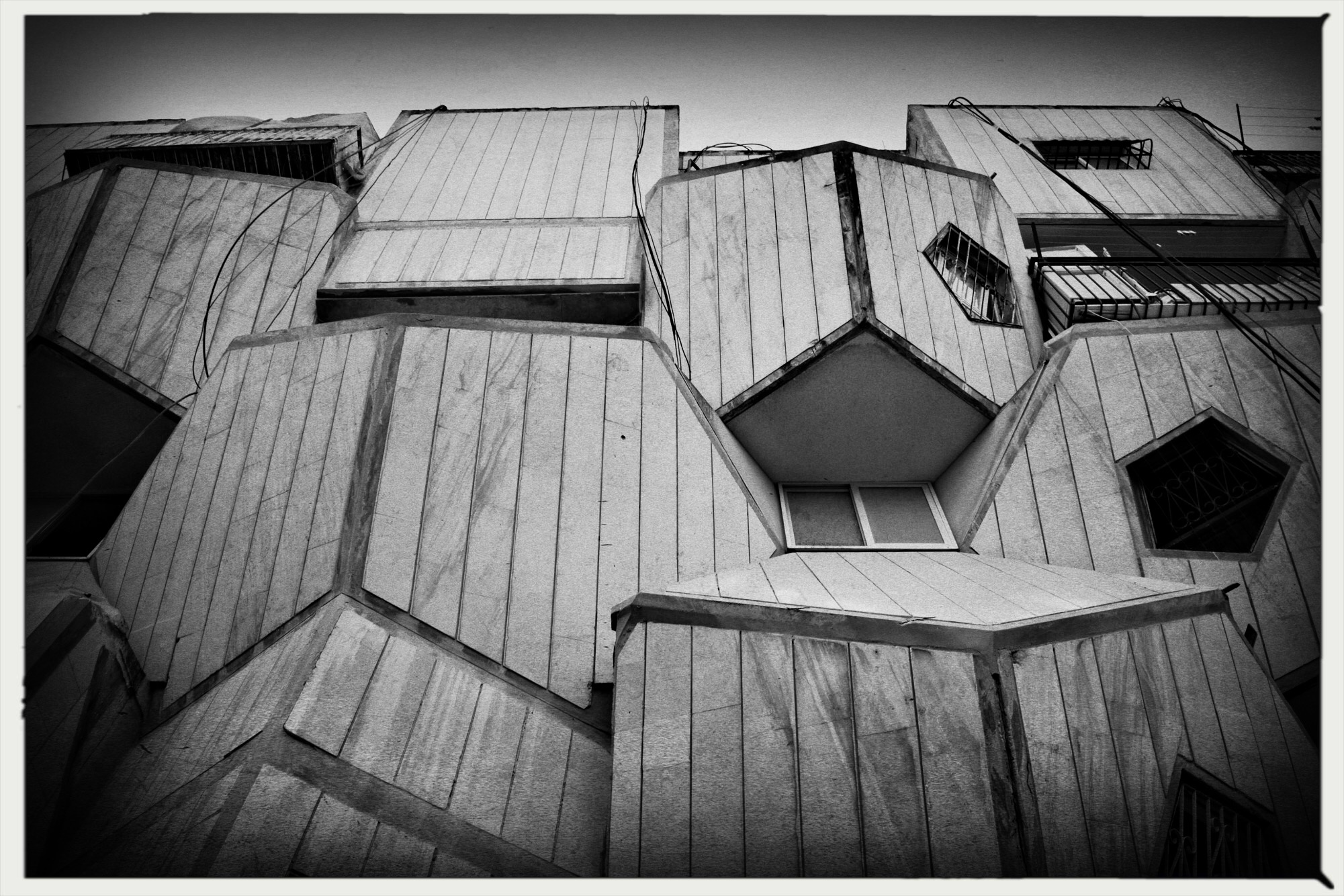
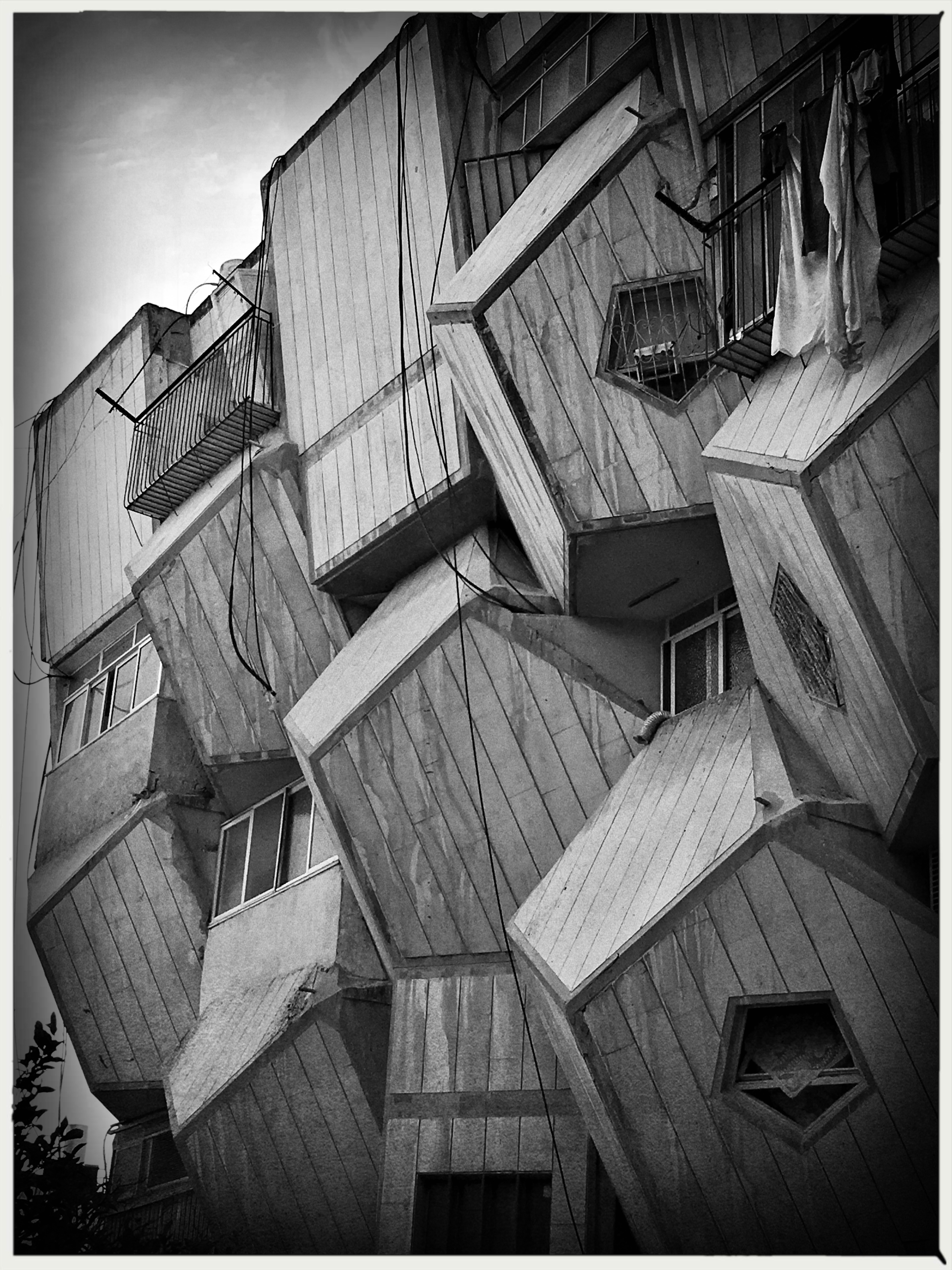
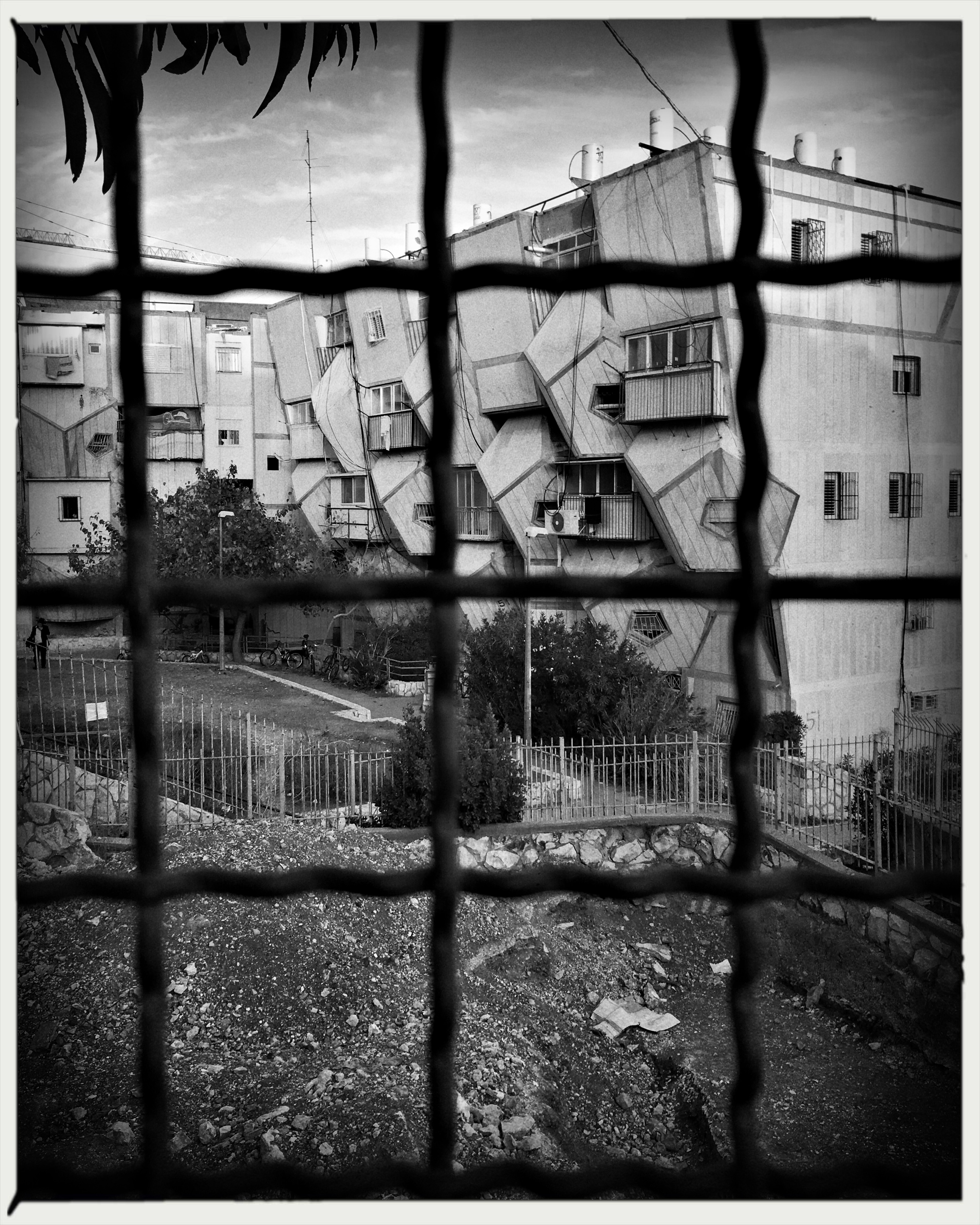
It’s hard to fully grasp the enormity of Ramot Polin from any of the entrances to the complex. The large clusters of prefabricated dodecahedrons (720 dwellings in total) lend to the appearance of a beehive built for humans. Each identical cluster of apartments is connected by equally identical paths, and wandering between them begins to feel a bit discombobulating after a while. It’s labyrinthine in the way that evokes a disconcerting lucid dream. But, I’ll be damned if the place doesn’t look really freakin’ cool.


The vast majority of Ramot Polin’s occupants are Haredi Jews, mostly families. We encountered a handful of children playing quietly in the maze-like areas between clusters of apartments, but none seemed too disturbed by our presence. One can only wonder what it must be like to live in such a complex, with its eerie silence and foreboding structures, and its isolated locale.

‘I’ve got a great idea for a dystopian novel, inspired by this place,’ I told my friend as we walked to the nearby bus stop, unprepared to pay that extortionate taxi fare again. ‘I’m going to name it after one of my favourite David Sylvian albums.’ She just laughed, knowing I’d never get around to it. Fair enough.

Also posted in: Travel
Tagged architecture, Israel, Jerusalem, photography