Recent Posts

Florence and the machinations of performative feminism

Medusa strikes back! ....unnecessarily, and at the wrong person

From Paris with love

Interview: Hitting the heart of Johnny Marr

Adventures in Modernist Melbourne

Categories
  • Architecture
  • Art
  • Film
  • Literature
  • Music
  • Travel


Tags

architecture ; art ; art exhibitions ; david sylvian ; feminism ; films ; france ; French cinema ; Hokusai ; inspiring people ; interview ; Israel ; Japanese art ; Jerusalem ; Johnny Marr ; melbourne ; modernism ; mythology ; Paris ; philippe garrel ; photography ; published works ; Robert Mapplethorpe ; travel


Archives

► November 2020
► October 2020
► August 2019
► November 2018
► February 2018
► November 2017
► October 2017
Category Archives: Music

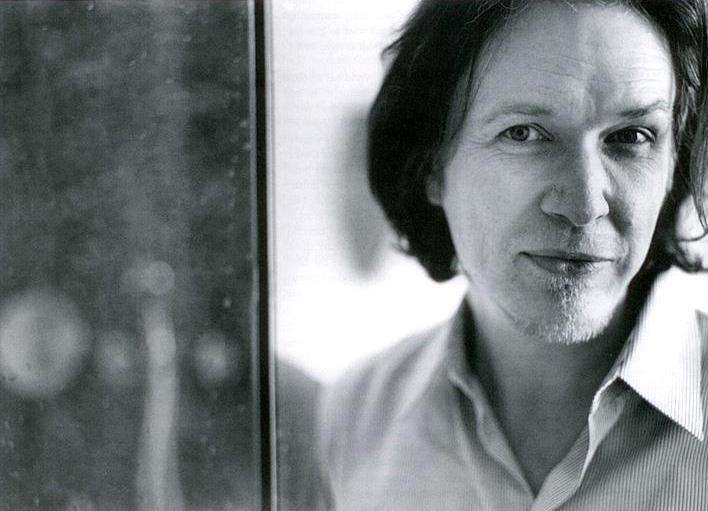
Interview: Hitting the heart of Johnny Marr

November 29, 2018

Interview originally published in the June 2018 issue of Dynamic.
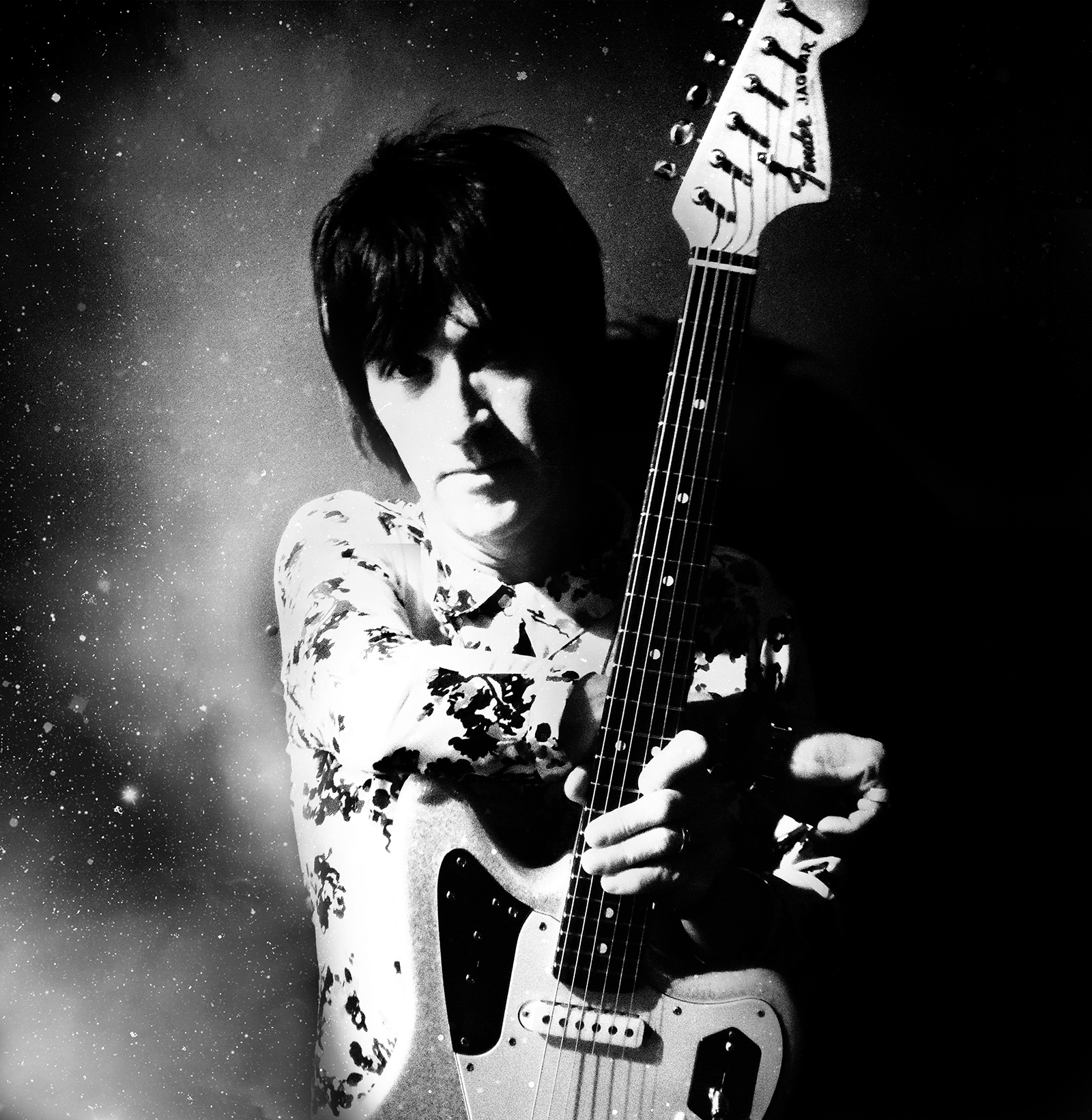
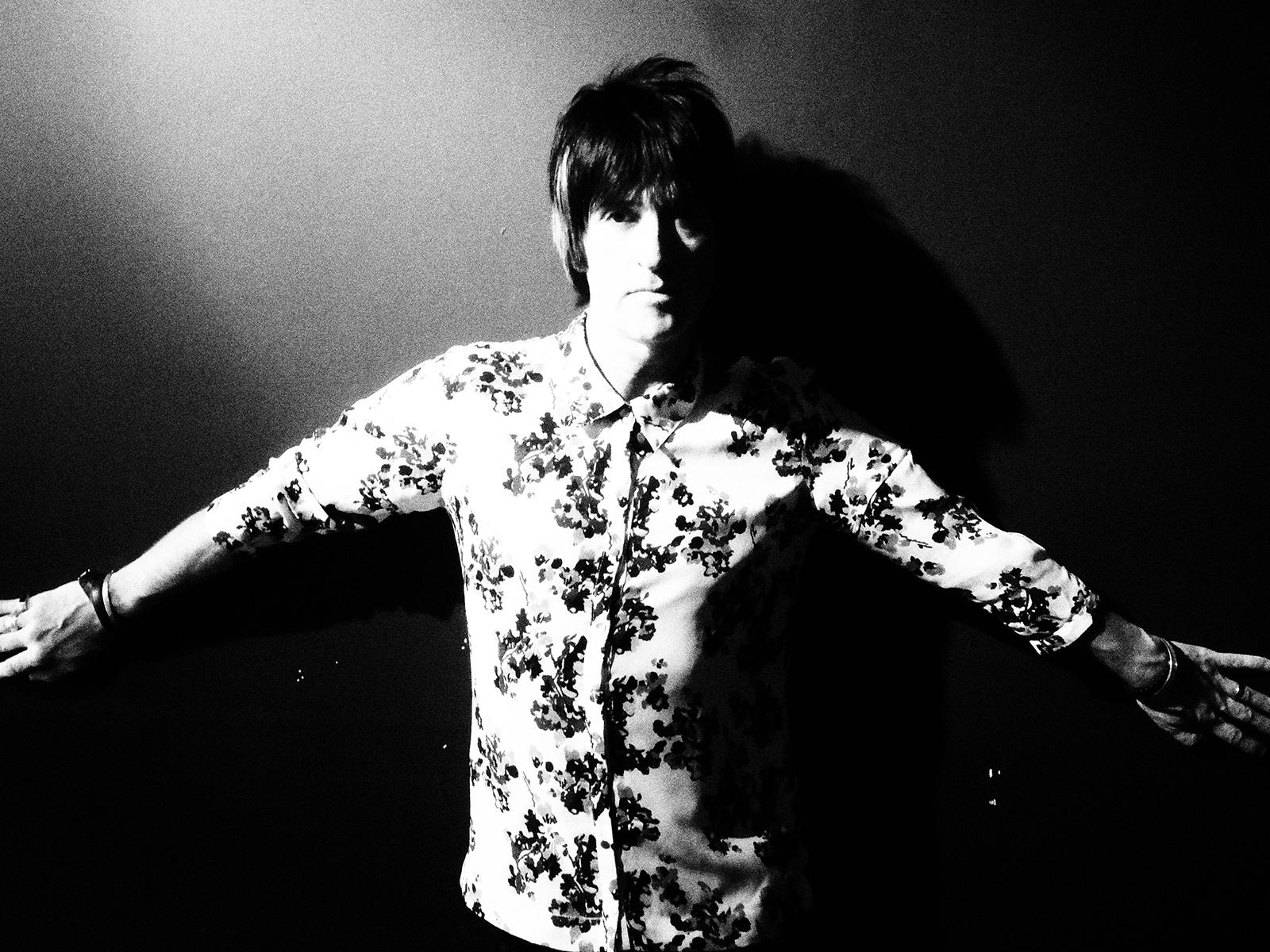
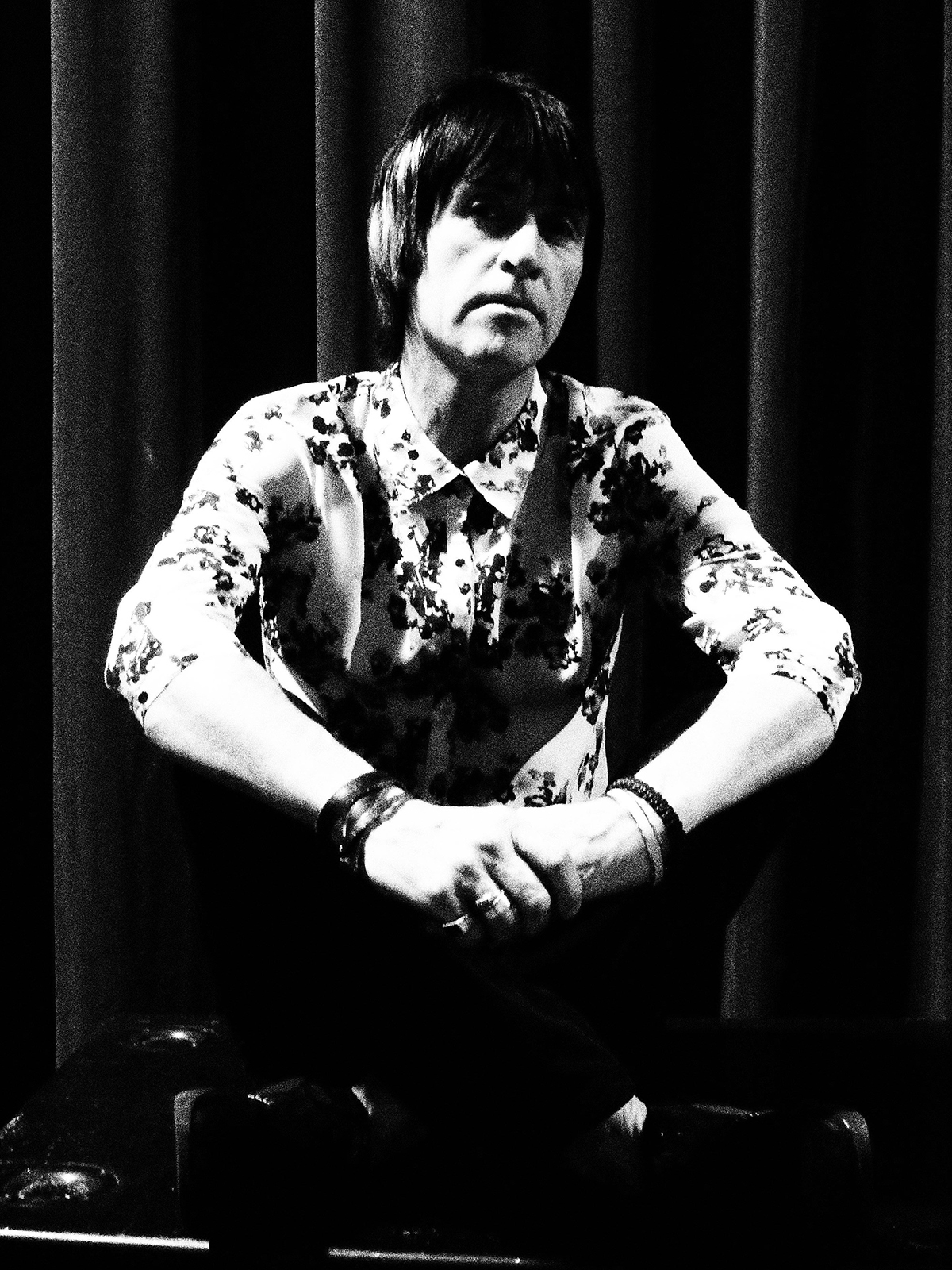
Photos © A. Stevenson, Berlin, May 2018.

It was Susan Sontag who once said, ‘The greatest effort is to be really where you are, contemporary with yourself, in your life, giving full attention to the world.’ This is an effort, I feel, that Johnny Marr has certainly made, and more so than ever in the five years since first striking out as a solo artist.

Though understandably admired for decades as a guitarist alone, it’s been Johnny’s nascent career as a frontman that has cemented his reputation as one of the most-loved figures in the music industry. Beyond the fealty of his ever-growing fanbase, both the media and his contemporaries are routinely eager to sing his praises. To the press, he’s a man of great warmth and candour; to fellow musicians, an exemplar of enthusiasm and a consummate professional who’s never lost his passion for his art. To all of the above, he’s lauded as, to quote countless admirers, “one of the nicest guys in the universe”. Ebullient as such praise may be, there’s not a hint of puffery about it: these commendations are as sincere as Johnny himself is.

Johnny’s third studio solo album, Call The Comet, hasn’t even hit the shelves at the time of writing, but has already started to receive unequivocally glowing reviews from the press. Having launched into its production straight after writing and promoting his award-winning autobiography, Set The Boy Free, the anamnesis such a project required gave impetus to Johnny’s desire to return the focus of his work to the present – and beyond.

‘Writing Set The Boy Free was obviously all about looking back, the story so far,’ Johnny explains. ‘When it was done and I went out on the book promotion tour, that too was all about looking back. So when the time came to make Call The Comet, I was pretty eager to think about the present, or the future. I was ready to leave the past in the past.’

The Messenger and Playland drew on the present for inspiration as well, with songs inspired by Johnny’s observations of society. The media, politics, technology, escapism, hedonism and urban life were recurrent themes. ‘I like to make the lyrics more observational than introspective,’ Johnny told me in an earlier interview a few years ago. Many of the lyrics on Call The Comet are in fact a creative fusion of both; an optimistic imagining of an alternative future to that which seems to realistically await us. In The Messenger and Playland, the characters in Johnny’s songs sought escape through technology, play and urban exploration. This time, they’re seeking another world entirely. I wonder how much of this is also a reflection of a change in Johnny’s attitude, and the atmosphere of his working environment, since the start of his solo career.

‘There is a difference,’ he admits. ‘I probably feel a little bit different, and the world definitely feels different. Being in my new working space [The Crazy Face Factory] has some influence too, which I like. It’s a very interesting place and quite atmospheric. My environment has always effected me, and I think the record has the sound of the place – plus I always want to do something different from the last thing, change the attitude of the music a bit. The only time haven’t done that was when I wanted Playland to feel like an extension of The Messenger. Call The Comet is different.’

Call The Comet’s two opening tracks, ‘Rise’, and ‘The Tracers’, both tackle the theme of escaping to a new reality head-on. Both convey a sense of urgency combined with optimism and empowerment, both sonically and lyrically. ‘Get ready to run’, the former warns us, while in the latter the protagonist urges their companion to ‘Come with me, evaporate’.

‘The story is that the earth wants to ‘re-set’,’ Johnny says, adding to his explanation that ‘Rise’ is the story of two people living in a futuristic society that popped up after a comet hit. ‘I had the idea about us calling out to some intelligence somewhere, which is where Call The Comet comes from – and isn’t actually that far-fetched when you think about it, as humankind has been doing that forever in the form of religion. The idea of “The Tracers” was of an intelligence more evolved than us, smarter, and probably kinder, certainly wiser…evolved.’

Such an apocalyptic concept as wiping clean the slate of humanity could easily be misconstrued as bleak and fatalist, but there’s far too much optimism in Johnny’s lyrics to feel that that’s the case. ‘Time won’t change us / It ain’t so easy / Rise to forever / New flames got lit’, ‘Rise’ asserts with its soaring vocal, while in ‘The Tracers’, the admission that ‘they know we’ve lost the way’, combined with the belief that ‘Tracers have come for all here’, implies faith in being rescued by the source of intelligence being reached out to. These are the sentiments of a man who knows the world is in trouble, but still believes it’s not too late to save it. What would it take to “fix” our troubled society, I ask?

‘One way would be to fix the ecology, change the sea levels, climate, carbon, oxygen levels…that’s just for a start,’ Johnny begins. ‘How about they banish all political figures to some remote place somewhere? We could do with being taught a lot of things to survive. The characters in “Rise” are facing up to the prospect and about to take on the new world.’  The sense of urgency in Johnny’s words is palpable.

‘The Tracers should hurry, actually. We need them.’

The alternative society envisioned throughout Call The Comet is undoubtedly an improvement on our current one, though it’s telling that Johnny steers clear of describing it as Utopian. Johnny is, after all, a realist. By its very nature, a genuinely Utopian society is downright impossible, owing to the infinite variety of definitions of Utopia humankind can contemplate. One man’s heaven is another man’s hell, and besides – wouldn’t a perfect world be awfully boring? Surely some degree of hardship or discomfort can be beneficial – even necessary – in life? Johnny seems to agree.

‘The human condition is probably meant to be challenging and have conflict and all of that in order for us to eventually evolve mentally and philosophically. We’ll get there in the end, I guess,’ he concedes, then adds wryly: ‘…some, anyway.’

There may be no point striving for Utopia then, but striving for a better world is the point entirely, and the key theme to Call The Comet’s lyrical narratives. What then, I ask Johnny, would his idea of a positive alternative society actually entail?

‘Tolerance for a start; the idea that everyone is allowed to follow their own belief system without being pilloried or killed for it,’ he begins. ‘Unfortunately some beliefs have intolerance built into them, so there’s a problem right there. Religion is very flawed, isn’t it?’ He pauses for a moment to contemplate further, before continuing: ‘Decent clothes shops. Free art galleries, nutrition, and a home for everyone who needs it…spaces where kids can skate in cities without getting hassled…decent food on trains, lots of jobs for people in public places, decent wages…the list goes on and on…no reality shows involving people singing, or music being murdered of any kind…’

Certainly nobody could accuse Johnny of the latter, especially after hearing Call The Comet. It’s arguably his most accomplished solo album to date, and if the critical reception so far is anything to judge by, will likely sit alongside The Queen Is Dead, The The’s Mind Bomb and Modest Mouse’s We Were Dead Before The Ship Even Sank in the near future as one of the definitive highlights of his career. While still employing his trademark style, Johnny’s appetence for innovation has ultimately resulted in a number of tracks that are a departure from those found on Playland and The Messenger: most noticeably ‘Walk Into The Sea’, and ‘New Dominions’. The former is a sweeping, dramatic and deeply emotional piece clearly inspired by his cinematic work with Hans Zimmer, while the latter is, by contrast, a relatively sparse arrangement with a pulsing, industrial sound and spoken word elements. ‘Walk Into The Sea’ is as Apollonian as ‘New Dominions’ is Dionysian. The former is the Yin to the latter’s Yang. Yet there’s a unifying lyrical theme, one of death and rebirth. ‘Let the slamming waves decide my fate, because hope is all I need’, Johnny insists on ‘Walk Into The Sea’, while in ‘New Dominions’, he seemed unperturbed acknowledging that he ‘won’t go to no paradise after’. Asked if he feels comfortable with his own mortality, his calm, laconic reply of ‘Oh yeah,’ says it all.

‘I don’t believe in heaven and hell in the traditional sense, but I don’t think this is all there is by any means…nah. Humankind is just not that smart, and even with that, we only use a very small part of our brain’s capacity,’ Johnny asserts. ‘To think that our senses and our awareness are the sum total of the achievement of the universe is ridiculous to me. There’s a lot more going on that we don’t know about, and aren’t meant to know about. It would overwhelm us to get an inkling of it – but that’s okay, I like mystery, and as I say, I think we’re probably supposed to be up against ourselves to evolve into something at some point. “New Dominions” touches on that in places,’ he adds.

Though there are clearly recurring themes, Call The Comet isn’t really a concept album. The sensual otherworldliness of ‘Hey Angel’, the frantic escapism of ‘My Eternal’ and the starry-eyed soaring beauty of ‘Spiral Cities’ all possess something of the same atmosphere as ‘Rise’, ‘The Tracers’, ‘New Dominions’, and ‘Walk Into The Sea’, but the remaining songs could be more accurately described as either political or personal. The gorgeously catchy, semi-acoustic ‘Day In Day Out’ is the track Johnny confesses to being the most autobiographical on the album.

‘Some songs demand that you put your emotions in, even if it’s not that apparent. “Day In Day Out” is about the predicament of a questing and relentless mind, which can be a blessing, and is often fun, but can sometimes be difficult. I think some people will know what I’m taking about.’

Sonically, a number of tracks on Call The Comet seem to draw on the atmosphere of the early 80s post-punk and new wave genres. There’s a hint of early Cure about ‘My Eternal’, and ‘Actor Attractor’ sounds like a stunning hybrid of The Sisters of Mercy, Asylum Party and late 80s Depeche Mode. I suggest that such tracks could best be described as “darkwave”, and Johnny agrees – although he never set out to intentionally compose in that style. ‘The truth is that I just followed an atmosphere that I felt around me, and my emotions when I was writing,’ he says. ‘Call The Comet is very much the result of me following my feelings and mining my imagination. Beyond that I don’t know why the music came out the way it did. I followed something.’

The influence of ambient music is also subtly apparent in the album’s overall mood, but most noticeably on ‘Walk Into The Sea’, with its lengthy instrumental intro and gently throbbing drum line, resembling the rhythmic pulsation of a heartbeat. ‘I like a lot of ambient music,’ Johnny discloses. ‘Early Brian Eno of course, and plenty of obscure things. David Sylvian has done some very good things that have stood the test of time.’

Perhaps unsurprisingly though, considering what a voracious reader Johnny is, Call The Comet’s biggest influences are literary rather than strictly musical. While Johnny has described the album as his own magic realism, he considers the genre itself “too fanciful”, and instead turned to science fiction, poetry and counter-culture classics for inspiration.

‘I’m always delving into all sorts of stuff,’ he explains, then begins to rattle off a list of influential titles: ‘The Ticket That Exploded by William Burroughs…I Etcetera by Susan Sontag, Autobiography Of Red by Anne Carson…there’s a lot of things I get into. “Spiral Cities” was inspired by a book called The Crystal Chain Letters,’ he adds, referring to the correspondence of a group of expressionist architects led by Bruno Taut in the early 20th century, in which Taut and his contemporaries shared their fantasies of an ideal future through a series of chain letters.

‘I love Joan Didion,’ he continues, ‘and the sixties poet Spike Hawkins. Dave Wallis’ Only Lovers Left Alive, I remembered from a while back and that inspired “New Dominions” a little bit. Not everything goes into my songs though,’ he clarifies. ‘I have a lot of different things going on.’

Science fiction and dystopian fiction in particular have also featured heavily in Johnny’s recent reading lists. ‘I like The Machine Stops by EM Forster. Good story telling and very much ahead of its time. HG Wells is also interesting. Aside from the fact that his imagination was astounding, there’s a psychedelic aspect to the writing. Not in a sixties “trippy-hippy” way; more otherworldly and disconcerting – a bit gothic sometimes, and extremely prescient. It works well in these times. It’s very interesting. I like Burroughs style, although a lot of the concepts haven’t dated well in the post internet age. Ballard’s ideas were quite brilliant though; completely unique.’

With all this talk of utopias, dystopias, and alternative societies, I must ask Johnny to settle a debate. Does he think Huxley’s (Brave New World) or Orwell’s (1984) vision of the future is the most accurate in our current times?

‘Easy. Brave New World,’ he answers, without hesitation. ‘I think Orwell was on the right track, obviously, but Brave New World is beyond that, and Huxley was tapped into a more universal aspect of the Human Condition. It wasn’t all political.’

For Johnny, his Brave New World is the one he’s forged for himself since the dissolution of a certain seminal 80s band that journalists simply won’t stop asking him about. It’s not that Johnny isn’t proud of his past, nor that he has any serious regrets about it: it’s just that he’s far more interested in what he’s doing right now. ‘I probably would have missed out on a lot of things,’ he admits, when asked what he thinks would have happened if he’d started out as a solo artist, or launched his solo career much earlier. ‘I see my time playing on different records during the 90s as learning a ton of things I needed to know about making records and writing songs. I also avoided a lot of things I didn’t want to do, such as press attention and all of that. I can’t imagine dealing with any more of that stuff than I already have. I wouldn’t have wanted to miss out playing in The The or Modest Mouse, movies, or the Cribs shows. I like the way things have gone. It feels right to me.’

He continues, pondering what fans’ reactions would have been if Johnny had gone solo after The Smiths, as his quondam songwriting partner swiftly did. ‘The music would’ve been about the fifth thing people talked and thought about,’ he hypothesises. ‘That isn’t the reason I didn’t form a band though. I just wanted to do things in a different way. So that’s what I did.’

What the fans at least are talking and thinking about first and foremost right now is Call The Comet – almost to the point of obsession. On social media, the buzz has been unwavering for months, and has only intensified in recent weeks, following a string of exclusive launch shows in the US and Europe, leading up to the album’s release.

‘My audience tend to be really nice people,’ Johnny says, as we’re discussing his engagement with fans on social media. ‘They have a certain shared mentality that makes me quite proud. The fans know what I’m about and social media has made that more obvious and given us a nice dialogue.’ He concedes that there is a dark side to social media, but ‘I don’t engage with or tolerate that stuff’. Fortunately, perhaps as a result of the audience echoing back Johnny’s own kindness and positivity, ‘so far it’s not turned up too much in my own arena.’

‘There’s a really good feeling with the fans,’ he continues, back to focusing on the positives. ‘As you say, they can be very enthusiastic and often very funny. They’re also quite protective of me, and that is really lovely sometimes. The fans like guitars, and they like melody, and are usually above a lot of the nonsense that the press try to drag us all into about The Smiths this and The Smiths that…blah blah blah. The fans are above all that and are very cool.’

‘If you’re lucky you get near the end of recording a song and think “this is going to be a good one to play live”. Sometimes you think a song will sound good on the radio…someone says “that’s a single”…that kind of thing. When things like that happen, and you hope they do, your mind turns to the audience. It’s when a record is done that I wonder how fans will react to it. That’s always been a thing for me.’

If the overwhelmingly positive reaction from fans so far about Call The Comet is anything to judge by, it’s safe to say Johnny doesn’t have to wonder anymore.


Tagged interview, Johnny Marr

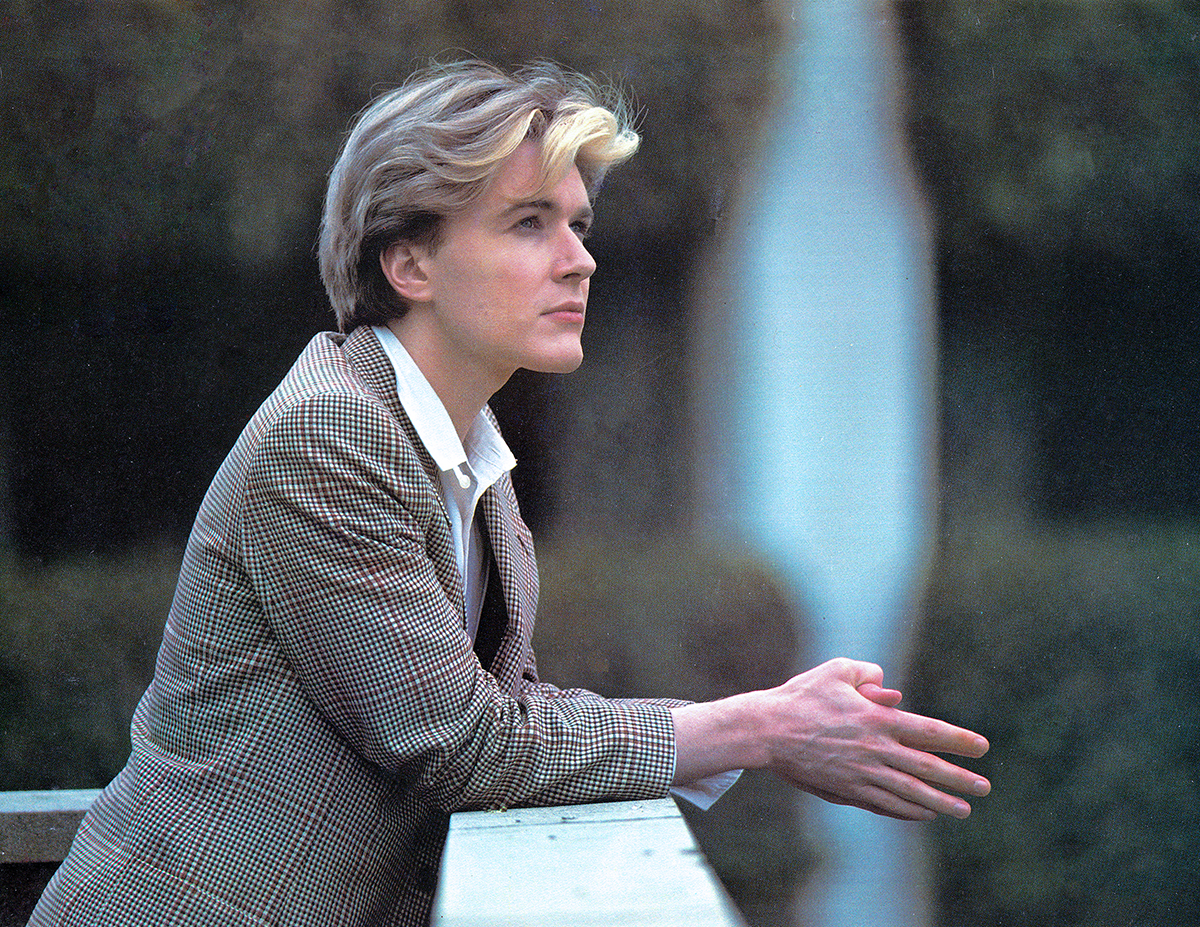
The Pure Genius of David Sylvian: 10 life lessons from The Greatest Living Englishman

February 23, 2018


1. Evolve and experiment, always.

David Sylvian’s protean career of forty years has encompassed an extensive variety of genres, from his cornerstones of art-pop/rock, downtempo, ambient and experimental electronica, to dabblings in prog-rock, avant-jazz and world music. The resulting mélange of styles that comprise his impressive oeuvre are indicative of a creative yet restless spirit; an admirable yearning to keep pushing his own boundaries, and to continue evolving as an artist. Each new album or project seems to entail a subtle reinvention of the self. To get too comfortable would be creative suicide.

Over the years, David’s evolution in style has brought him continuously closer to the periphery of mainstream music. While some fans – particularly those whose fondest memories of David are with his former band, Japan – see this as an unwelcome transmogrification, it’s undeniable that his desire to experiment is brave. Fortunately, satisfying the Vox populi has never seemed to be much of a concern to David. For more sapient fans, his most recent albums are rich in nuanced beauty; expressive and atmospheric.

Would it be easier for David if he continued to produce albums in the style of his much-loved late 80s masterworks, such as Gone to Earth and Secrets of the Beehive? Possibly, but that’s not the point. David’s art is an authentic expression of his inscapes, and as those inscapes change, so does the manner in which they are reflected in his work. To intentionally recreate the atmosphere of works that presumably no longer resonate with his inner self would be a compromise of his artistic integrity. Whatever might come next for David will undoubtedly reflect whatever he’s driven to express in that moment in time.


2. Less is More.

Minimalist music often poses a challenge to listeners because it commands one’s full attention and intense focus to be fully appreciated. Done well though, the results can be striking and delicately beautiful. Manafon, David’s most recent studio album, achieves these results.

David presumably is well aware that his greatest strength musically lies in his singing, and on Manafon, that preternaturally stunning voice takes centre stage, with little adornment. There’s an element of existential nudity imbued in such a stripped back delivery, and it’s that very starkness that gives songs such as ‘Small Metal Gods’, ‘Random acts of senseless violence’ and ‘The Greatest Living Englishman’ their power. Bravery through vulnerability.

No song from Manafon better encapsulates the “Less is more” mentality better than ‘125 Spheres’, though: clocking in at a mere 29 seconds and with lyrics consisting of only 20 words, it’s an exercise in brevity that nonetheless packs one hell of a punch, leaving the listener wondering exactly what it was they just listened to. That such a song, as well as Manafon’s much longer tracks, have such an impact on the listener despite their relative lack of instrumentation, is proof that if the foundation of your art is strong enough, it doesn’t need excessive ornamentation.


3. Embrace and explore your spirituality.

David’s syncretistic spiritual beliefs have been an influence on his art since the mid-80s. Though not explicitly religious in a traditional sense, David’s personal search for meaning has most notably led him to the Buddhist and Hindu faiths (particularly Zen Buddhism, and the Vedanta school of thought in Hinduism), with explorations in Shintoism, Sufism, Shamanism, Gnostic Christianity, the Kabbalah, esotericism, and the teachings of George Gurdjieff along the way. These explorations not only speak to David’s intellectual and philosophical curiosity, but are indicative of a receptive mind and spirit unencumbered by solipsism.

Though there was evidence of David’s philosophical inclinations in many of his earlier works, the late 90s and early 00s marked an epoch in his spiritual quest, drawing on his immersion in Vedanta, the teachings of the Hindu mystic Mother Meera, and devotion to his guru, Mata Amritanandamayi (Amma). Numerous songs from 1999’s Dead Bees on a Cake were inspired by this turning point in his life: most obviously ‘Praise (Pratah Smarami)’, sung in Sanskrit by his former guru Shree Maa, as well as ‘Krishna Blue’, ‘I Surrender’ and ‘Thalheim’ (the latter referring to the German village where David received a darshan from Mother Meera in the early 90s). Several additional non-album or live-only tracks also reflect this spiritual milieu, and arguably even more pronouncedly: the hymn-like ‘Bhajan’, written in response to David’s first meeting with Shree Maa; the lyrically self-explanatory ‘Blue Skinned Gods’; and ‘The Song Which Gives the Key to Perfection’, taken from a Hindu text, the Devi Mahatmya, and sung by David himself in its original Sanskrit.

You’d be forgiven for assuming from this significant body of work that David must be a devout and practicing Hindu, but by his own admission his beliefs are more a hybrid of both Hinduism and Buddhism. “I like the clarity of Buddhism and I also like the devotional aspect of Hinduism. And my own practice somehow embraces both of those disciplines,” he explained to a Canadian newspaper in 1999, adding in another interview the next year that his guru, Amma, had taught him that “it is possible to embrace the godless beliefs of Buddhism as well as the world populated by numerous gods.” Such a teaching is immeasurably comforting for those who find that no single school of faith resonates with them wholly. In David’s work, elements of numerous religions and spiritual styles not only coexist, but amalgamate into a fusion of faiths that is uniquely his: a testament to the esemplastic power of David’s creative and perspicacious mind.


4. Know how to pick the right collaborators.

Since the onset of his solo career, David has always had a keen understanding of the type of musician whose talents best compliment his own. Contrary to the public persona of an aloof and introverted lone wolf, David has in fact regularly collaborated with other artists, in addition to employing a large number of collaborators for his own albums. His work with Robert Fripp (The First Day, and live album Damage) and Holger Czukay (Plight & Premonition and Flux + Mutability) are two drastically different – but equally brilliant – collaborative efforts that allowed David to experiment with and showcase his aptitude for prog-rock and ambient styles, respectively. Personality and an emotional connection are clearly important factors too, especially when it comes to repeated collaborations. Life-long friend Ryuichi Sakamoto, whom David has regularly worked with from the early 80s right up until just last year, is an obvious example.

When it comes to the personnel David recruits for his own albums, one gets the impression that part of the secret to their successful work together lies in David’s trust in and respect for those he works with. While he remains a sagacious overseer, he gives his collaborators the opportunity to put their own unique spin on the material, and this open-mindedness not only gives strength to the artists’ personal connections, but stimulates the creativity of all involved.

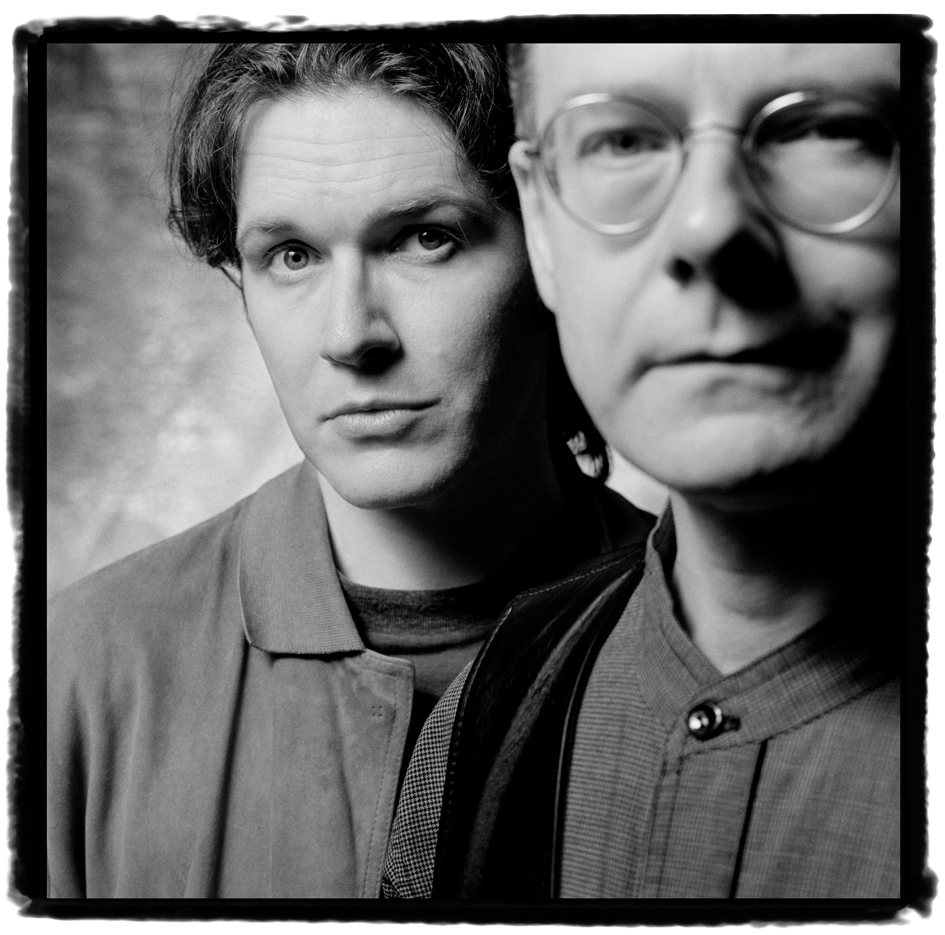
David Sylvian and Robert Fripp. 


5. Embrace life wholly – the good and the bad.

“I’m not a negative person; I’m a very optimistic person. I highlighted the darker side of life in my work because I think that’s the way to get people to reflect on the lighter side.”

– David Sylvian

For me personally, one of the most inspiring things about David is his insightfulness, and his ability to reconcile both the positive and negative aspects of life. He’s not naive, or oblivious to life’s struggles, but nor is he completely nihilistic. For many years, a recurring theme in David’s personal philosophy has been to embrace all experiences wholly and indiscriminately: acceptance of whatever life brings, even if what it brings is unpleasant. “The greatest kind of happiness is a kind of peace with yourself, coming to terms with yourself whatever the condition is,” David once said in a magazine interview. “Not a neutral calm, or a mindless calm, no. I think that true peace can only come through understanding.” It’s a philosophy that sounds reasonable and “simple” enough on the surface, but that necessitates tremendous mental and emotional strength to genuinely uphold. No doubt this belief has been enforced by David’s spiritual explorations, but the concept itself is secular, and we could all benefit from embracing it.

From Time Spent, a short film made in the late 90s with his then-wife Ingrid Chavez, comes what is perhaps the most astute and inspiring explanation of David’s philosophy:

“I view the experiences I encounter in life as opportunities from which to learn and to grow. There is a view, which is not easily grasped on a moment to moment basis, that whatever you are doing, whatever your predicament, however much you are suffering, it is all entirely perfect: it is as it should be. Obviously this is hard to acknowledge, particularly at certain periods in life. But just the remembrance of this fact could be immeasurably invigorating and allow for perspective to be glimpsed or perceived, which might not otherwise have been possible, so immersed in our personal experiences as we tend to be. I take this notion to mean we are given the lessons most pertinent to our growth: we are not given more than we can handle, and that if we recognise this fact in the midst of the experience, we can learn from the most difficult of our circumstances and move on.”


6. Never compromise your integrity.

“I’m stubborn, idealistic, uncompromising. There’s an underlying aesthetic at work that’s been my guiding principle for many a decade but it evolves, matures, it becomes more refined as time goes by.”

– David Sylvian

Since as far back as the early 80s, as frontman of Japan, David has stringently upheld the moral values governing his art. Like any artist, reaching an audience has always been important, but commercial success, especially at the cost of his integrity, has not: his creative goals have never been fame, money, or elevation of the ego. Self-expression, above all else, has been David’s raison d’être from the onset of his career, even if it means limiting his audience or his commercial viability. To David, success attained by compromising one’s value’s is not success worth having.

Such integrity is also evident in David’s personal conduct towards others, and dates back to the very first hours of his musical career, at the tender age of seventeen. After impressing Japan’s soon-to-be manager Simon Napier-Bell so much with his audition that Napier-Bell offered to sign him on the spot, David agreed only on the condition that his bandmates be included as well, despite Napier-Bell wanting to sign him as a solo artist. What degree of moral fortitude must one possess to take such a bold risk, out of loyalty to one’s friends? Mick [Karn], Steve [Jansen], Richard [Barbieri] and Rob [Dean] must undoubtedly have been grateful for this audacious move, though unfortunately less so when it came to reforming Japan in 1990 under the name Rain Tree Crow: a further testament to David’s integrity in the artistic sense, in not wishing for the new material to ride on Japan’s quondam success.

There’s always been an element of sacrifice in David’s desire to stick to his principles. Arguably, Rain Tree Crow would have been more successful both commercially and financially – and the project may even have continued – if David had been as willing to recant, at the last minute, their earlier agreement to disown the name “Japan” as his bandmates were. However, such acquiescence would have been in direct conflict with not only David’s overarching moral code, but the sentiment behind the project’s very existence.

It would be easy to get sidetracked by the thought of what opportunities and successes such highly upheld principles may have quashed, but to the man possessing them, such sacrifices are worthwhile. David’s integrity may have prevented him from achieving as much mainstream success as his work deserves, but it’s also the reason why he’s one of the most admirable musicians of the past forty years.


7. Pay attention to the aesthetic of the art, not the self.

While Japan was a visually striking group and much attention in particular was paid to David’s sartorial style and personal appearance, by the band’s final days David was becoming increasingly disillusioned with his own aesthetic. The visage that had initially been an escape from his dreary working class roots now needed to be escaped from, especially as the motivations for his art became clearer to himself. Being questioned about his make-up routine for teen magazines bordered on insult, and being lauded by the British tabloids as “The Most Beautiful Man in the World” was not conducive to being taken seriously as a musician and songwriter.

So, the work of art became the artist himself: the energy once channeled into his personal style was redirected towards his photography, and just as importantly, into the visual presentation of  his records and books.

David has not appeared on the cover of one of his own studio albums since his 1984 debut, Brilliant Trees, instead working with a range of talented visual artists whose work clearly resonates with David on an emotional level. There’s always something incredibly striking about the artwork David chooses to accompany his music, and it is often imbued with an ethereal quality, whether in the abstract paintings and drawings of Russell Mills (Gone to Earth) and Shinya Fujiwara (Dead Bees on a Cake), or the delicate, somewhat heartrending illustrations of Atsushi Fukui (Blemish) and George Bolster (Died in the Wool). Though the artworks themselves are obtained from or commissioned by third parties, David still always remains in control of the overall aesthetic, acting as his own art director.

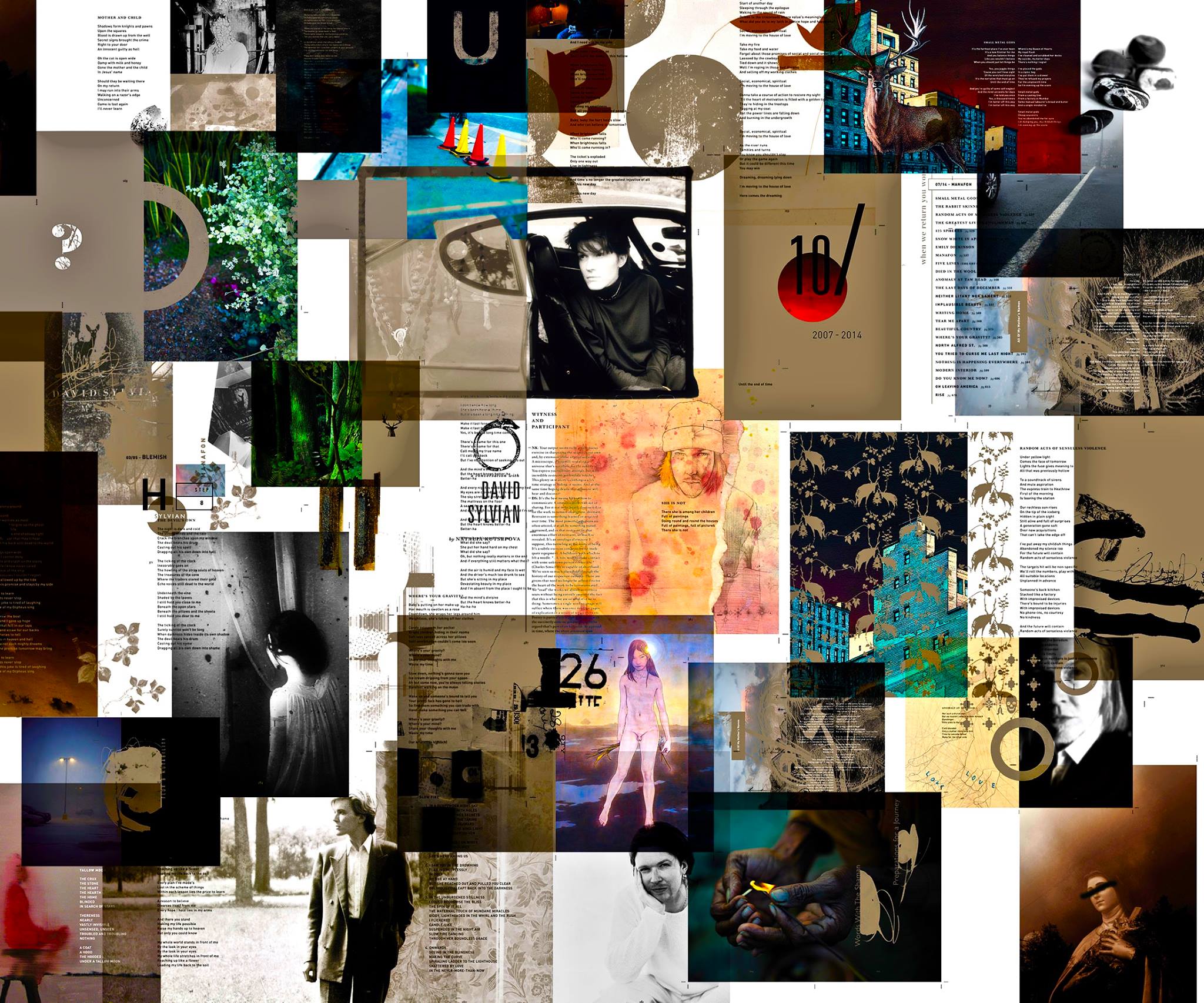
David’s interest in the visual aspect of his work is most evident in his book of writings, Hypergraphia. Working with friend and designer Chris Bigg, the lavishly illustrated 600+ page volume is an amalgam of a poetry book and a coffee table art tome. David’s own image is used very sparingly, with the bulk of the imagery being a combination of his photography and curated artworks from others. The result is a stunning collectible that perfectly compliments the beauty of David’s music and lyrics, and proof that a striking aesthetic can enhance a work without overpowering it.


Hypergraphia.


8. Value your own privacy.

David has always been an intensely private person. While one could easily theorise that his desire for privacy reflects of fear of vulnerability, it’s also entirely probable that David’s tight leash on his personal life is a means of ensuring that his creative work speaks for itself, without unnecessary added context. What David does share of his private life in interviews is often shared for the purpose of clarifying his art, or to express ideas that his work already does, in more detail. His respect for the privacy of others as well takes salacious gossip off the table, and a lack of ego negates the need to broadcast irrelevant details of his life for the sake of public interest or for attention. Such restraint is an increasing rarity in our current Age of Oversharing, and for that reason, David’s eschewing of such indulgences is all the more admirable.


9. Live in the present.

“I don’t have any personal desire or need to look back. I carry within me what I need to move forward.”

– David Sylvian

Far from the nostalgia he professed to be drowning in on 1984’s Brilliant Trees, David’s personal philosophy has long been to embrace the present, rather than either the future or the past. Recent interviews paint a portrait of a man becoming increasingly more self-assured and accepting of his circumstances, even if still not entirely comfortable in his own skin. “I didn’t feel at ease when young, but then I don’t feel at ease now for entirely different reasons. I am surer of myself. I know what I’ve got to offer,” David professed in a 2010 Q&A. It’s an uneasy form of acceptance, one that almost hints at resignation, but that nonetheless can also be seen as empowering. Focusing all of one’s energy on the present is a means of taking control, as the present is the only temporal mode which one can control: the past can’t be controlled because it’s already happened, and the future can’t be controlled because it’s not yet arrived.

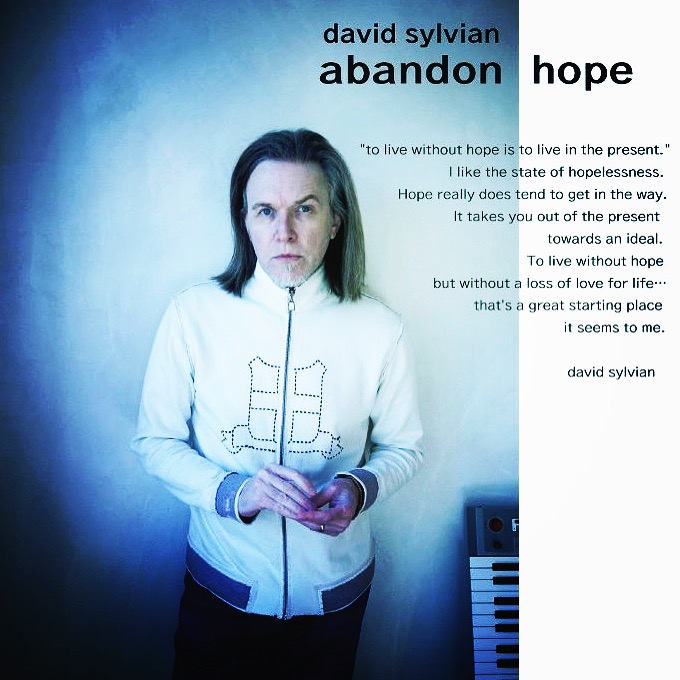
It’s important to note that David’s rejection of both the past and future in this sense is not a reflection of a negative attitude towards either, but born of a desire to make the most of the present, untainted by either regret or expectation. David talks of living without hope, but more importantly, without a loss of love for life. That’s a great starting place it seems to me, too.


10. Stay humble.

If David Sylvian were conceited, it’s fair to say he’d have a lot of reasons to be. Fortunately though, that’s far from the case: David’s humility is in fact one of his most defining traits, as well as one of his most endearing. It’s born of a combination of quiet self-assurance and a genuine lack of ego, and manifests itself in both his personal demeanour and his approach to marketing his work. Attention-seeking is a foreign concept. David is well aware that his work speaks for itself: we can easily recognise its brilliance without him having to point it out.

To further attempt to elaborate on the origins of David’s humility would be fruitless: it simply is. It’s an ingrained aspect of his personality, even if he does also take conscious measures to remain grounded.

David Sylvian really is one of the few truly enlightened artists of our time: a man of tremendous integrity, humility, bravery and insight. Here’s to him, on his 60th birthday – and may there be many more to come.


Tagged david sylvian, inspiring people

Touched by the hand of a godlike genius

November 1, 2017

It’s impossible to understate how important Johnny Marr’s music has been to me for the past couple of decades. In honour of his 54th birthday today, I thought I would highlight 54 underrated and/or lesser known songs that Johnny’s played on or written.

1. Lost In Sound (Malka Spigel, Everyday is like the first day, 2012)
Israeli musician/artist Malka Spigel is one of my favourite discoveries through Johnny’s myriad of collaborations. Dreamy and delicate with just a hint of melancholy wistfulness, Johnny’s gorgeous guitar complements Malka’s ethereal voice perfectly.

2. Get Me Wrong (Johnny Marr + The Healers, B-side, 2003)
I remain smitten to this day by every note played by Johnny in his Healers days, but this tune stands out to me as both particularly brilliant and criminally overlooked. It’s hypnotic and sensual, conjuring up images of dark, late, hedonistic nights. Best listened to with the lights out.

3. Heisenberg (Chris Spedding, Joyland, 2015)
An acoustic instrumental that conjures up mental images of the “old west”, there’s definitely a bit of a ghost-town feel to this song. One could even imagine this stunning composition standing alongside those of Ennio Morricone in a 1960s spaghetti western…

4. Exit Connection (Johnny Marr, B-side, 2015)
One of Johnny’s best B-sides, in my very humble opinion. It’s raw and spunky, and proof that Johnny’s never lost sight of his post-punk roots. My musical lexicon is sadly far too lacking to be able to adequately describe what I’m hearing around the 0:47 mark, but listen out for it. Pure magic.

5. Home and dry (Pet Shop Boys, Release, 2002)
Oh how this one tugs on the heartstrings… There’s just something in its bittersweetness that recalls many of Johnny’s own prettiest tunes, and so it came as no surprise to me whatsoever to discover that was his guitar I was hearing in it.

Top tip: If you’re a masochist like myself and enjoy listening to this on the plane home after a trip, have some tissues on hand.

6. Imitation of life (Electronic, B-side, 1996)
It’s probably rarely more obvious than in Electronic’s tunes how versatile Johnny’s work is. Great beat and synth lines, nice melody (once it kicks in), and yes, you can dance to it. What’s not to love?

7. Freeheld [Suite] (Johnny Marr & Hans Zimmer, Freeheld OST, 2015)
Though it tends to be eclipsed by their work on Inception, Johnny’s and Hans’ work on the Freeheld soundtrack is just as stunning and worth checking out. This piece in particular is painfully pretty – especially the guitar part starting around the 5½ minute mark – as well as very moving.

https://www.youtube.com/watch?v=iRsl7_mYzHA

8. Lonely Planet (The The, Dusk, 1993)
Fantastic album track from Johnny’s second period of collaboration with The The. It’s both powerful and empowering, highlighted by Matt Johnson’s poignant lyrics. “If you can’t change the world, change yourself.”

9. The house I grew up in (Tweaker, 2 a.m. Wakeup Call, 2004)
What is Chris Vrenna’s secret? No, seriously – what magical spell must one be capable of casting to get both Johnny Marr AND David Sylvian to co-write songs for your album? My awe of Vrenna’s obvious charisma aside, Johnny’s contribution to the album is a breathtaking electro-ambient gem with a dark and haunting build-up throughout. Mystical, otherworldly, and utterly addictive listening.

10. Run in the dust (7 Worlds Collide, The Sun Came Out, 2009)
One of several brilliant Johnny-penned contributions to the 7 Worlds Collide charity album, there’s a slightly eerie and mysterious feel to this song, accentuated by Johnny’s smooth, breathy vocals. It reminds me of a hot, dry summer – in the best possible way.

Continue reading »


Tagged inspiring people, Johnny Marr