My first introduction to Japanese artist Katsushika Hokusai was through my best friend, who is a big fan of his work. Back in July, the National Gallery of Victoria opened a retrospective exhibition of his work, and having been insanely busy with work for the past few months, I only finally got a chance to see it today, in its closing week.
Having previously been somewhat disappointed by NGV’s Van Gogh and the seasons exhibition, I was pleasantly surprised by the scope and quality of the Hokusai exhibition. Joining works from NGV’s own collection were many pieces on loan from the Japan Ukiyo-E Museum (JUM) in Matsumoto, and a great many (if not all) of Hokusai’s most notable works – including two early rare prints of what is arguably the most recognisable image in Japanese art, The great wave off Kanagawa – were on display.
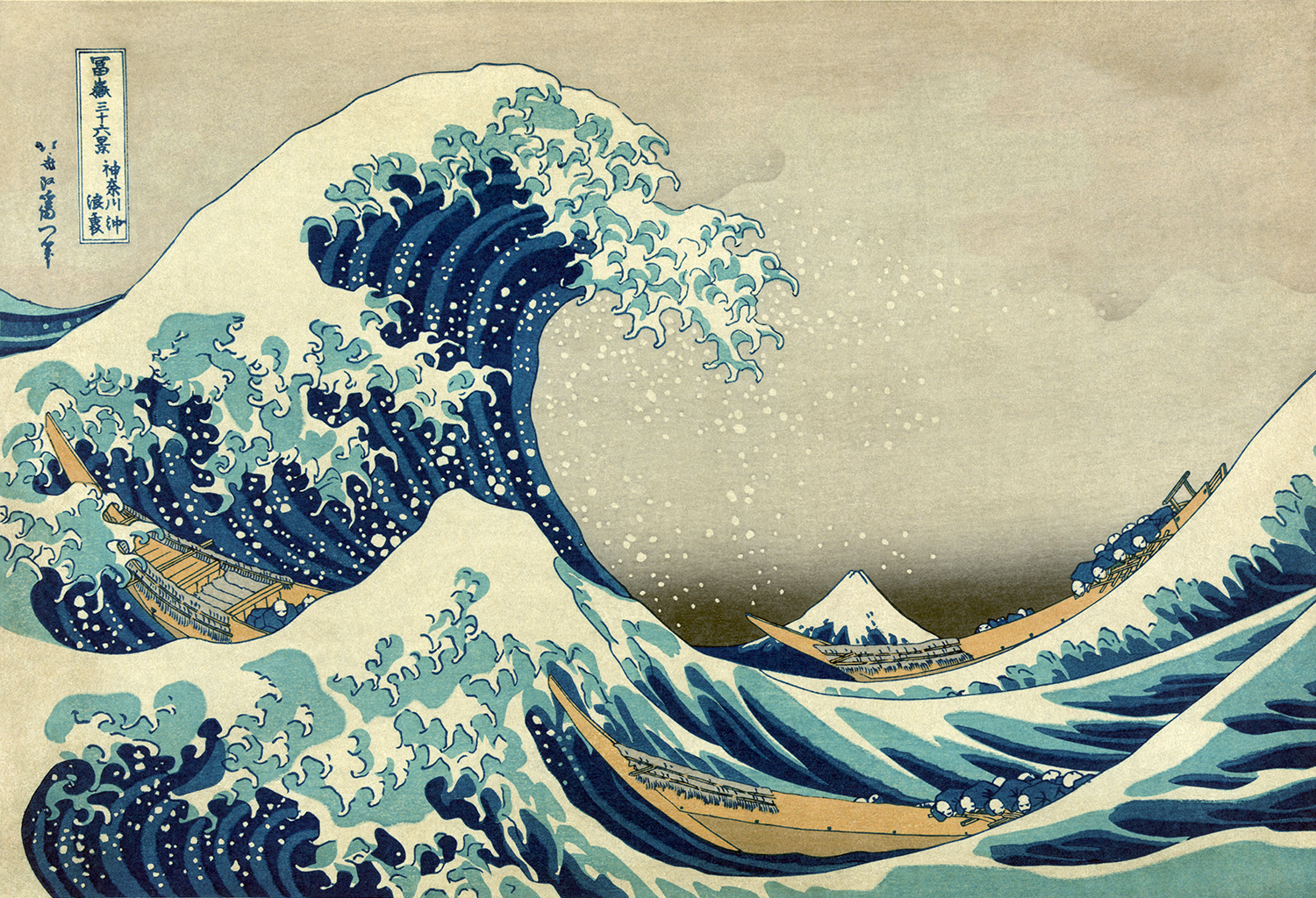
The great wave off Kanagawa
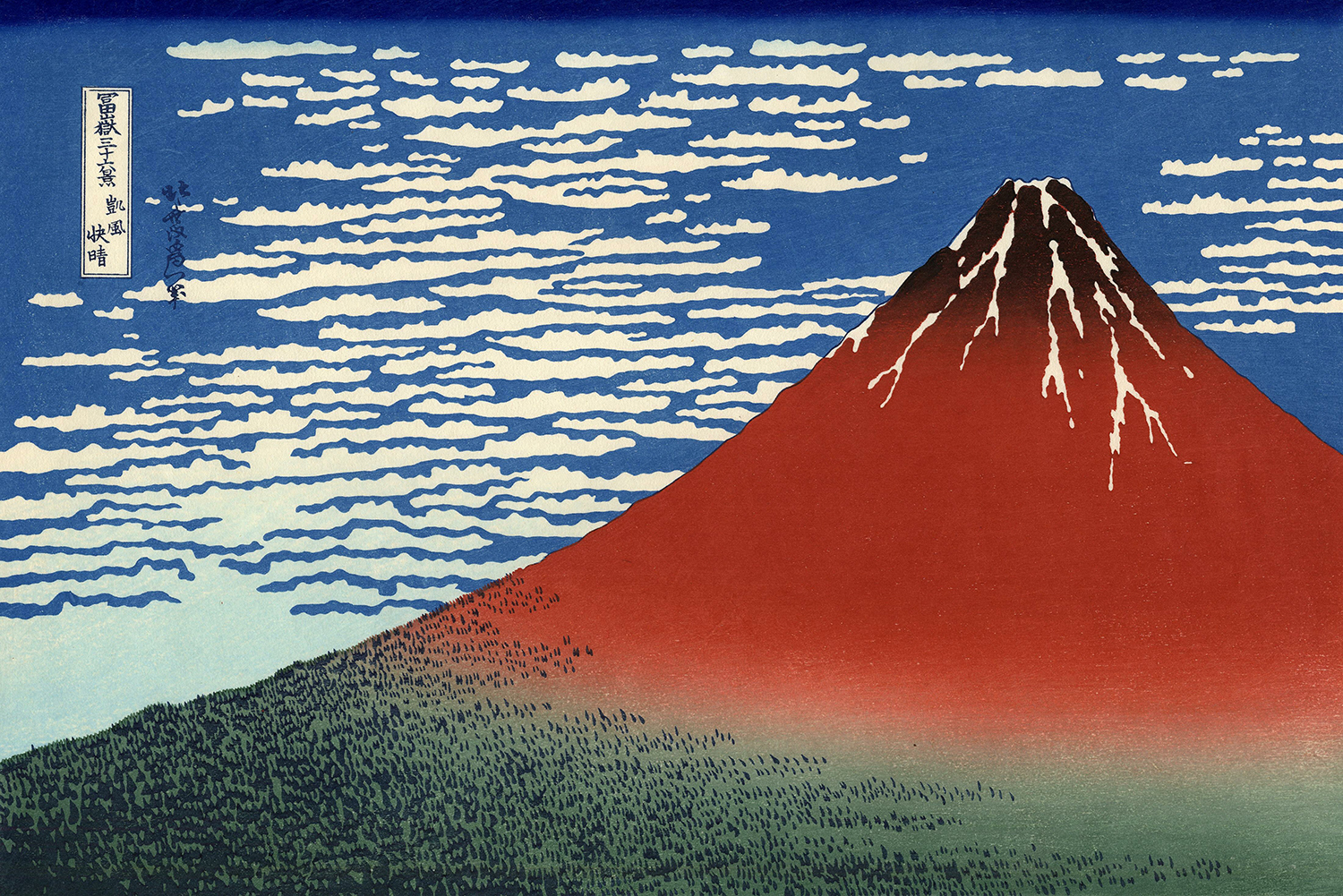
Hokusai was well-known for producing his paintings and woodblock prints in series: the most well-known being Thirty-six views of Mt Fuji, of which The great wave is a part. In these prints, the omnipresent mountain is often juxtaposed with scenes of everyday human life in the city of Edo (now modern-day Tokyo), highlighting its cultural significance to the Japanese people. One of my favourites from this series is Kajikazawa in Kai Province, in which the peak of Mt Fuji can be seen in the background while a fisherman casts lines into the sea. (In my mind, the fisherman is trying to catch or tame the waves. In reality, I suppose he’s just trying to catch…fish.)
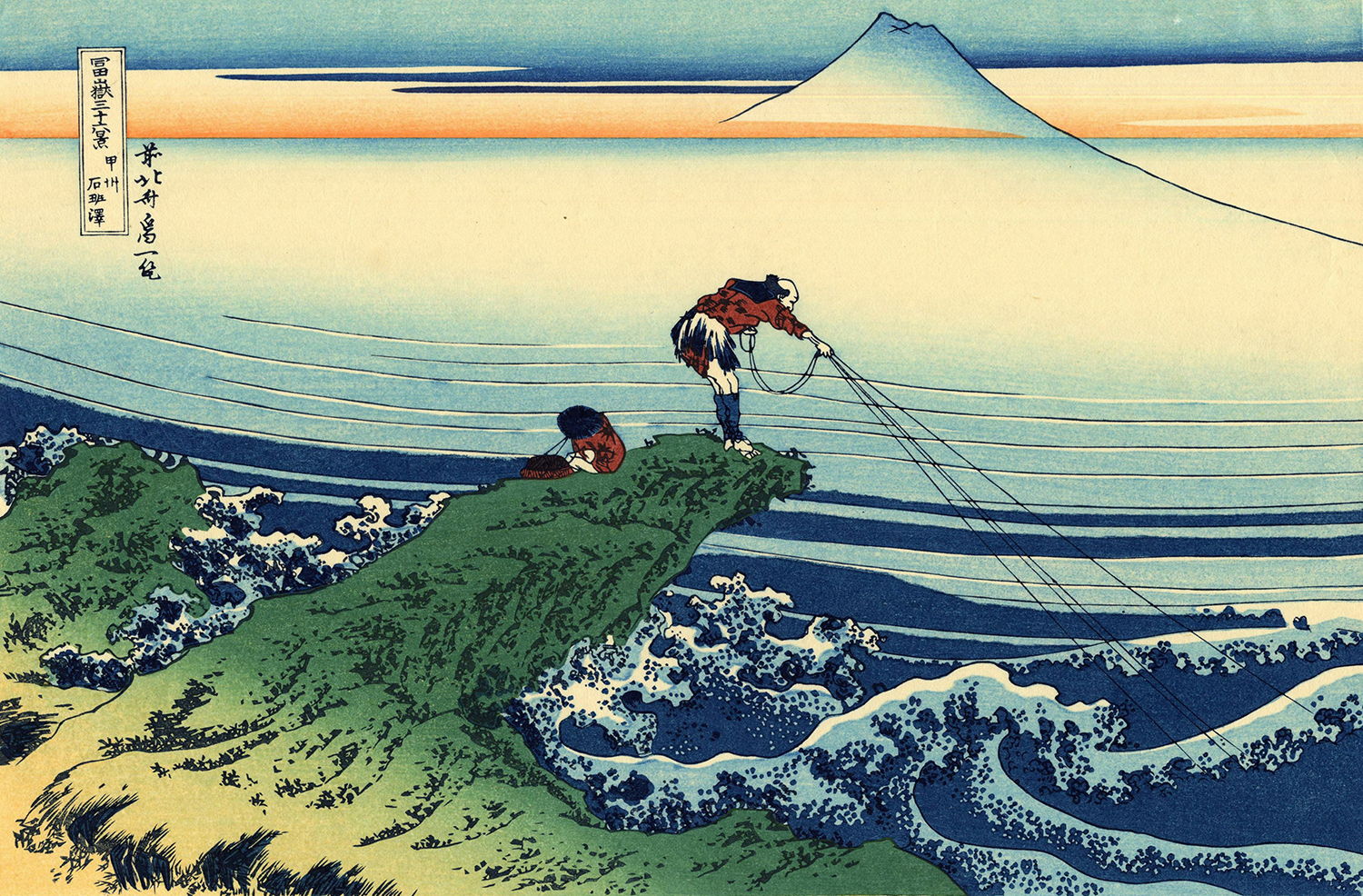
Kajikazawa in Kai Province
In addition to the Mt Fuji collection, several other series were on display, including A Tour to the Waterfalls in Various Provinces, which I personally found to be the most powerful and visually striking set of works in the exhibition. (The Amida Falls in the far reaches of the Kisokaido Road in particular is just stunning.) Hokusai’s literary interests are also evident in One Hundred Poems Explained by the Nurse, a series of prints based on the Japanese poetry anthology Ogura Hyakunin Isshu.
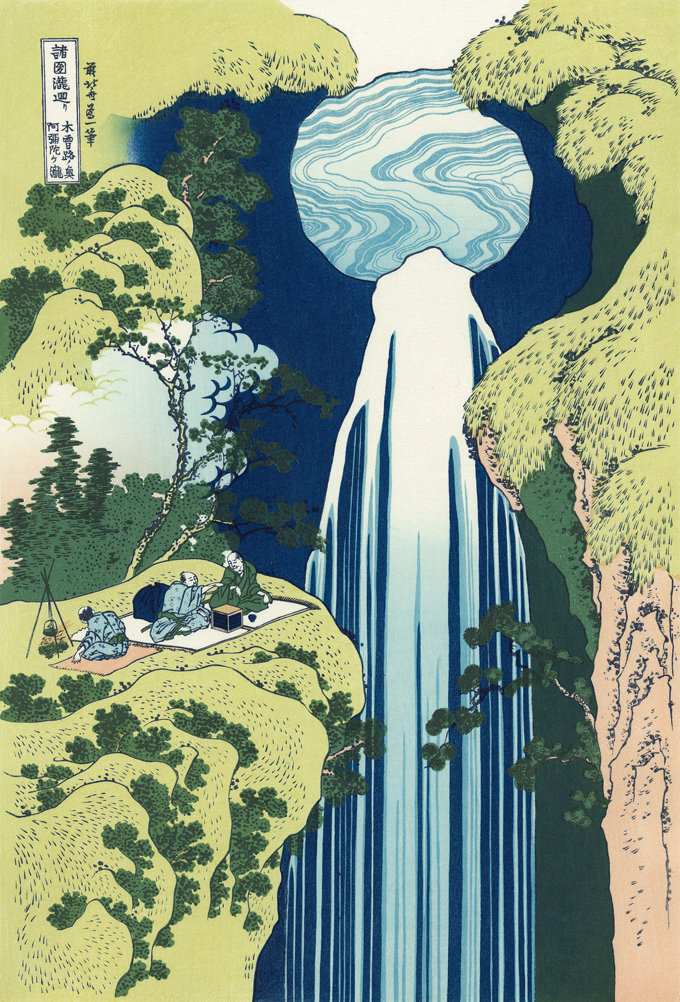
The Amida Falls in the far reaches of the Kisokaido Road
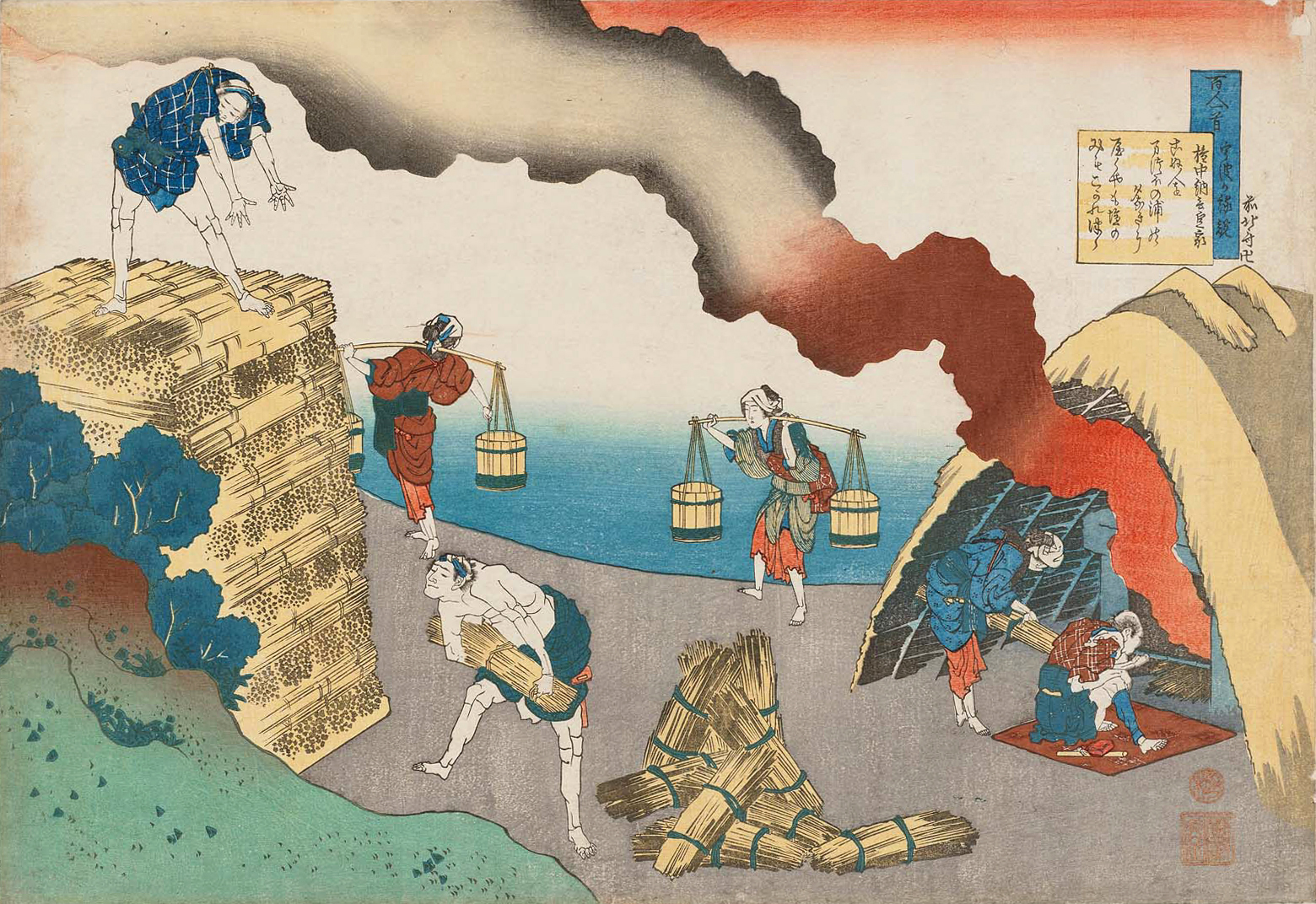
Gonchunagon Sadaie (based on a poem by Fujiwara no Teika)
‘Like the salt sea-weed
Burning in the evening calm
On Matsuo’s shore
All my being is aglow
Waiting one who does not come’
– Fujiwara no Teika
One of the most interesting series on display, however, was a small collection of five woodblock prints comprising the One Hundred Ghost Stories series. Each depicting a Japanese ghost story from the Edo period, they’re genuinely quite creepy, and a world apart from the serene beauty of Thirty-six views of Mt Fuji or A Tour to the Waterfalls.
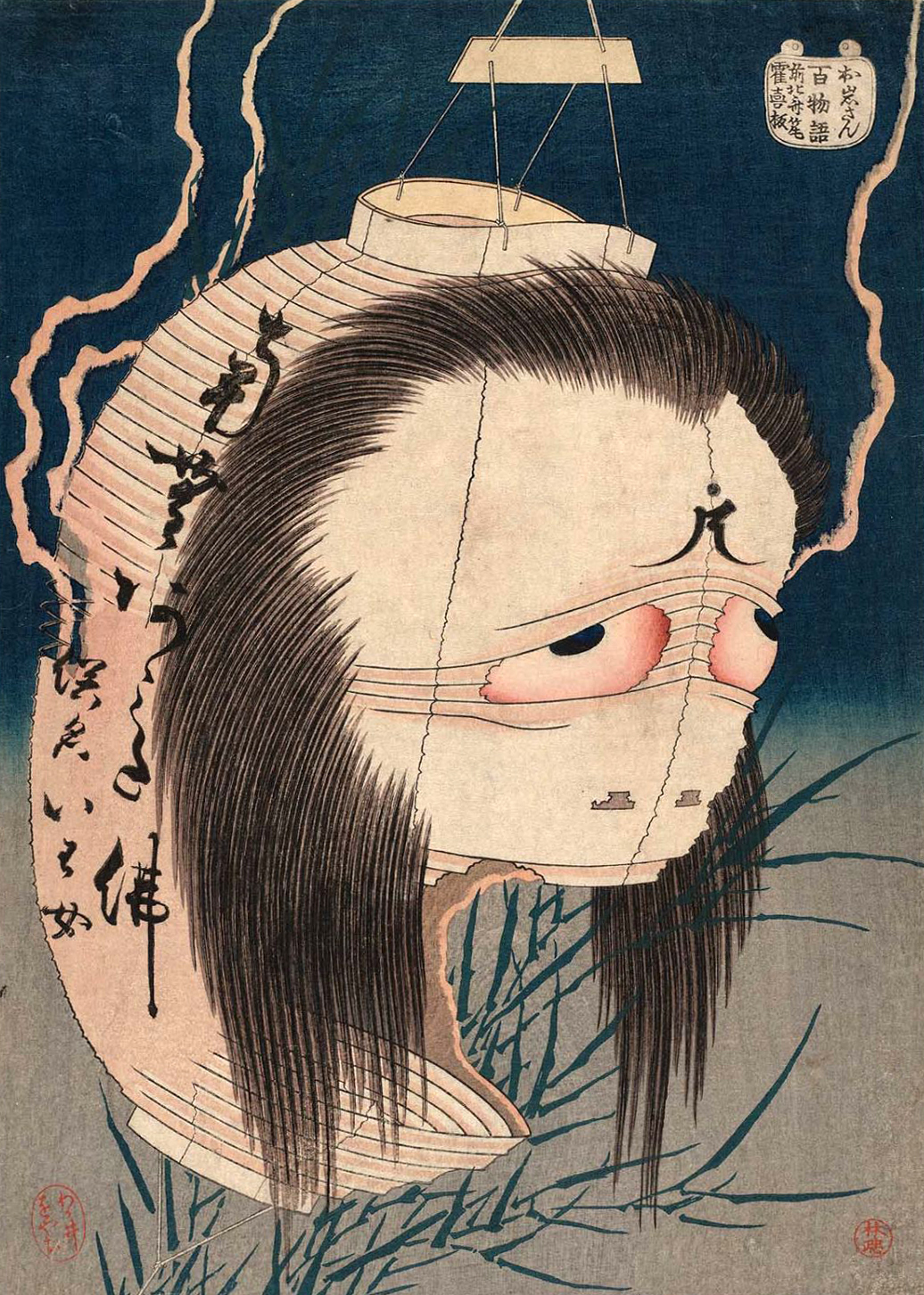
The ghost of Oiwa
“The main character in ‘The mysterious story of Yotsuya’ is the virtuous Oiwa, who is married to Tamiya Iemon, a struggling samurai turned umbrella maker. Iemon falls in love with his young neighbour Oume, whose father administers a potion to Oiwa that awfully disfigures her. Iemon is disgusted and wants a divorce, but in despair Oiwa kills herself instead. Later, Iemon marries Oume, but is tricked by the ghost of Oiwa into killing his new wife. Iemon rushes away in horror and takes refuge in a temple, where in the middle of the night Oiwa’s horrific, deformed face appears in an old torn temple lantern. Driven to insanity, Iemon takes his own life.”
(Sidenote: I think I’ll be sleeping with the lights on tonight.)
Hokusai, the self-described “old man mad about drawing”, sadly never attained great financial success in his own lifetime. Yet within a decade of his death he would be cited as a major influence by European Impressionist artists such as Vincent Van Gogh, Gustav Klimt, Paul Gaugin and Edgar Degas, who all collected his woodcuts.
In the words of the latter:
“Hokusai is not just one artist among others in the Floating World. He is an island, a continent, a whole world in himself.”